 Skip to content
More than 2.4 million Texas-registered vehicles are not matched to an insurance policy, about 12% of all registered vehicles. When an unlicensed driver hits you in Houston, that fact points to a possible coverage problem, but it doesn't mean your injury claim has no value.
A car crash can change your life in seconds, but you don't have to face recovery alone. You may be dealing with pain, medical appointments, vehicle damage, missed work, and an insurance company asking questions before you know what happened. The most important shift is to treat a crash with an unlicensed driver as a liability and coverage investigation, not merely as a licensing violation.
An unlicensed driver may still have insurance. The vehicle may be insured under the owner's policy. Your own policy may include uninsured or underinsured motorist protection. Those possibilities need to be investigated before you assume there's no practical path to compensation.
Understanding Your Rights After a Crash With an Unlicensed Driver
The missing license often becomes the most noticeable fact at the scene, but it isn't necessarily the fact that decides your case. Texas negligence law focuses on whether someone acted unreasonably, whether that conduct caused the collision, and what harm resulted. Driving without a valid license may create separate criminal or administrative consequences, but it doesn't automatically prove that the driver caused your injuries.
The same principle applies if you were the injured driver and didn't have a valid license. Your license status is separate from the other driver's conduct. If another motorist ran a red light, failed to yield, drove distracted, or struck you from behind, the investigation still needs to examine that conduct and its connection to your injuries.
The first questions that matter
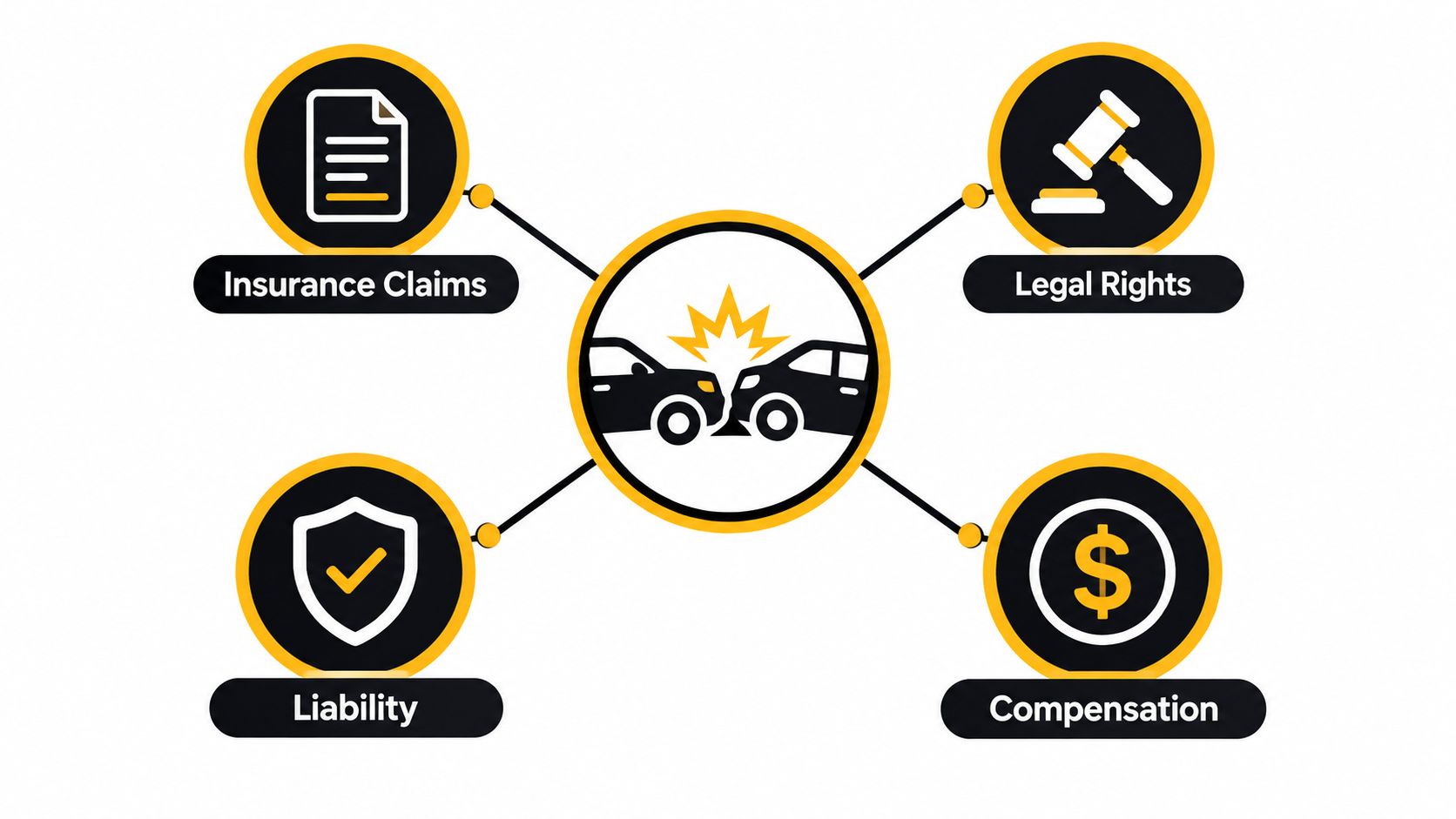
A careful claim review asks three separate questions:
- Who caused the collision? Police findings, vehicle damage, photographs, traffic signals, witnesses, video, and driver statements may help establish negligence.
- Who may be legally responsible? The driver may be responsible, but the vehicle owner, an employer, or another party may also require investigation.
- What insurance or assets may pay the claim? The answer may involve the driver's policy, the vehicle owner's policy, commercial coverage, or your UM/UIM protection.
Texas Department of Insurance guidance explains that insurers must offer uninsured and underinsured motorist coverage with automobile policies, although a named insured can reject it in writing. When purchased, UM/UIM coverage may address bodily injury, medical expenses, vehicle damage, pain and suffering, rental costs, and diminished value, subject to the policy and the facts of the crash. Texas guidance on uninsured motorist protection also identifies a $250 deductible for vehicle-repair claims under this coverage.
Practical rule: Don't accept “the driver had no license” as the final answer. Ask which policy covers the vehicle, whether the driver had permission, and whether your household has UM/UIM coverage.
A quick property-damage settlement can look helpful when bills are arriving. It can also release injury claims before your medical outlook is clear. Before signing anything, review the release and coverage picture with a Houston resource on uninsured and underinsured claims.
Immediate Steps to Take at the Crash Scene
Your first responsibility is safety, not building a perfect legal file. Check for injuries, call for emergency help, and move a driveable vehicle out of traffic when it's safe. If someone is injured, a vehicle can't be moved, intoxication is suspected, a driver has no insurance, or a driver leaves the scene, call the police.

Protect your health and evidence
Use this order when you can:
- Call 911 and report the collision. Tell the dispatcher about injuries, blocked lanes, suspected intoxication, or the other driver's lack of insurance. Ask how to obtain the crash report.
- Get medical care. Some injuries become more noticeable after the immediate shock fades. Follow the provider's instructions and tell medical professionals how the collision occurred.
- Exchange information carefully. Obtain the other driver's name, contact information, vehicle details, owner information, and insurance details. If possible, photograph the insurance card and driver's license.
- Photograph the scene. Capture vehicle positions, damage, traffic signs, lane markings, road conditions, visible injuries, and the surrounding area. Preserve dashcam or nearby video as soon as possible.
- Identify witnesses. Record names and contact information. A witness who saw a traffic signal or lane movement may become important later.
- Keep your statements factual. Don't argue about fault, guess about your speed, or say that you're uninjured when you're unsure. Answer police questions truthfully, but avoid speculation.
TxDOT's Texas road safety handbook recommends checking for injuries, exchanging information, identifying witnesses, and photographing the scene. Those steps are especially important when the other driver's license or insurance information may be incomplete.
A Houston driver rear-ended on I-45 may feel fine at the scene, then develop neck pain later. That driver should seek medical evaluation, preserve the crash report, notify the insurer, and keep bills, prescriptions, wage records, and treatment notes. For collisions on that route, I-45 / Gulf Freeway Accident Lawyer is a resource focused on representation for crashes on I-45, one of the nation's deadliest highways.
The following video offers additional general guidance about immediate accident steps:
Key Texas Legal Concepts You Need to Understand
A personal injury claim becomes easier to manage when you understand the words insurers and attorneys use. Four concepts shape most Texas car accident cases: liability, damages, comparative fault, and the statute of limitations.
Liability and comparative fault
Liability means legal responsibility for causing harm. To establish liability, you generally need evidence that the other driver owed you a duty to drive safely, breached that duty, caused the crash, and caused injuries or other losses.
The driver's unlicensed status may be relevant background, but it doesn't replace proof of negligent conduct. A collision report might show that the driver failed to yield. Vehicle damage might support a rear-end impact. Witnesses or video might establish that the driver crossed lanes. Those facts are more important to civil liability than the license label by itself.
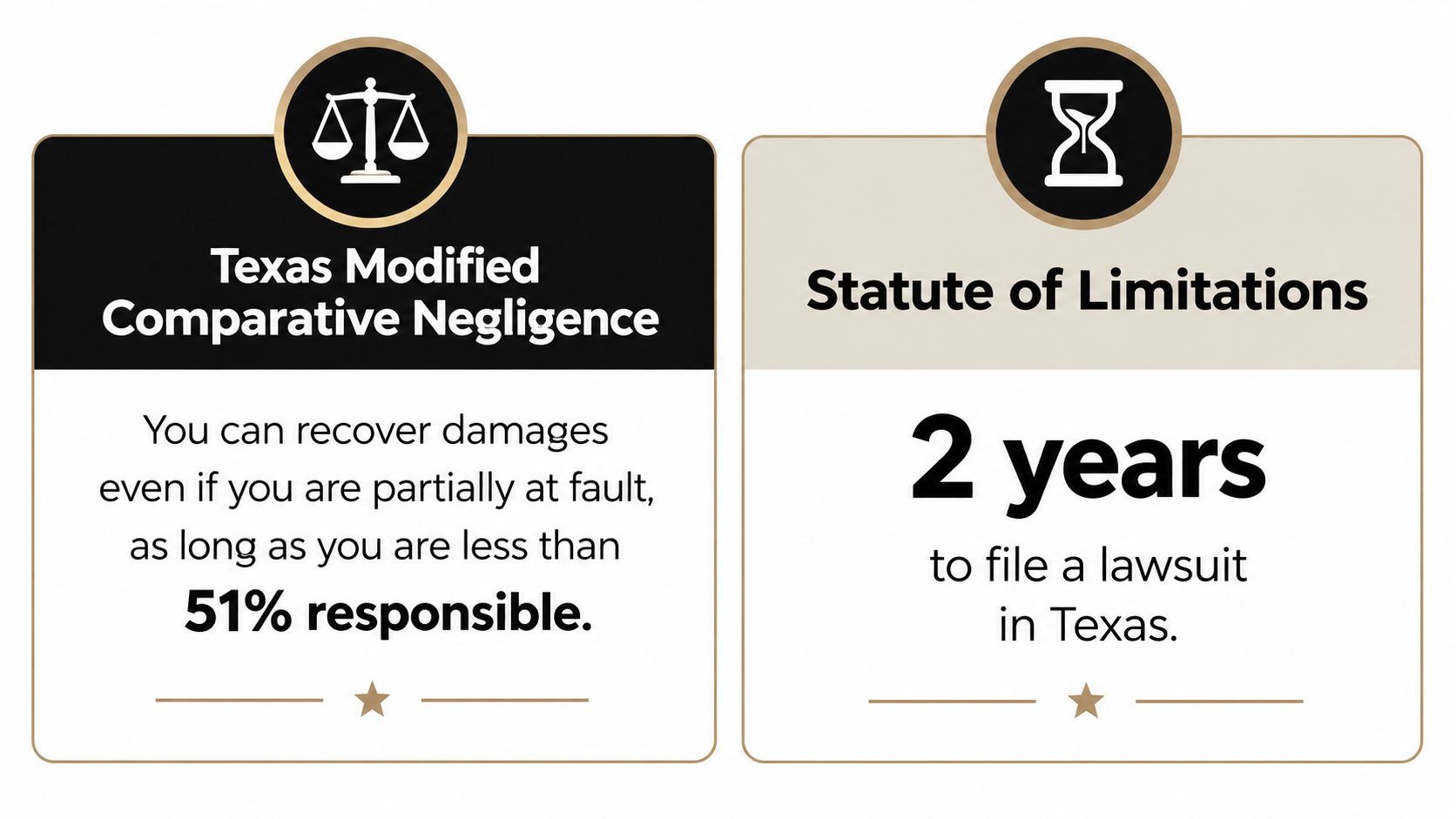
Comparative fault means a court can assign responsibility among the people or entities involved. If you contributed to the crash, your recovery may be reduced by your percentage of responsibility under Texas Civil Practice and Remedies Code Chapter 33. The question isn't only whether you made a mistake. Investigators must examine what each person did, how it contributed to the collision, and how the responsibility should be divided.
Damages are the losses caused by the injury. They can include emergency treatment, hospital care, medication, rehabilitation, property damage, lost wages, physical pain, emotional distress, reduced quality of life, impairment, disfigurement, and supported future care or earning losses. A claim should account for more than the first medical bill.
The filing deadline
The statute of limitations is the legal deadline for filing a lawsuit. Texas generally gives an injured person two years to file a personal injury lawsuit, measured from when the claim accrues. A wrongful-death claim generally has a two-year period measured from death. The applicable deadline can involve exceptions, so confirm it promptly with counsel rather than relying on an insurer's timeline. Texas limitations law provides the governing statutory text.
Texas Civil Practice and Remedies Code Chapter 41 addresses exemplary damages. These damages are meant to punish particularly wrongful conduct and deter similar conduct, not just repay ordinary losses. A routine licensing violation doesn't automatically support exemplary damages. Facts such as knowingly dangerous intoxicated driving may raise different issues, but proof is required.
For information about the insurance floor that may apply to a vehicle, see this explanation of Texas minimum insurance requirements.
Navigating Insurance Coverage and Policy Limits
The driver's license is only one part of the coverage investigation. An unlicensed driver may have a personal liability policy, may have been driving a borrowed vehicle, or may have been operating a vehicle covered by the owner's policy. An insurer may also dispute permission, exclusions, or whether the policy applies to the particular driver.
Start by requesting every available insurance record. That includes the driver's insurance information, the vehicle owner's policy, declarations pages, endorsements, and any information about employer or commercial use. If the driver was working at the time, identify who owned the vehicle and who controlled the driver's work.
The vehicle owner may matter
A vehicle owner can become relevant when the owner gave permission to use the vehicle or knowingly entrusted it to someone who was incompetent, unsafe, or unlicensed. Negligent entrustment isn't automatic. The evidence must support the owner's knowledge and the connection between that decision and the crash.
The owner's policy may provide coverage even when the driver's license status creates a dispute. The insurer may argue that the driver lacked permission or fell within an exclusion. That's why asking only, “Did the driver have insurance?” is too narrow. The better question is, “Which policies may apply, and what do their terms say?”
Your UM/UIM protection
Texas Insurance Code Section 1952.101 requires an automobile liability insurer to provide UM/UIM coverage in the policy or by supplement unless the named insured rejects it in writing. Section 1952.104 limits recovery to the policy's stated liability limits and includes a physical-contact requirement when the responsible vehicle or driver is unknown. Texas Insurance Code Section 1952.101 explains the statutory offer and written-rejection rule.
UM/UIM coverage isn't an automatic payment. You still generally must establish the other driver's fault, the extent of your damages, and the amount of available liability coverage. Notify your own carrier promptly, but don't assume your insurer's involvement means you should accept its first evaluation.
Property coverage can also cause confusion. Collision coverage generally relates to damage from a crash, while other-than-collision coverage generally addresses other covered causes. A plain-language explanation of comprehensive and collision differences may help you understand the property side of the claim, but it doesn't replace review of your policy.
For policy limits and settlement concerns, consult this guide to insurance policy limits after a Texas car accident. Keep in mind that a minimum liability policy may not cover the full value of severe injuries, making the vehicle owner's policy and your UM/UIM coverage especially important.
Managing the Claims Process and Legal Deadlines
A claim usually moves through several stages, and each stage serves a purpose. First, preserve evidence and report the collision. Next, notify potentially applicable insurers and gather policy information. During treatment, maintain a running record of symptoms, appointments, bills, prescriptions, missed work, and household help.
After your medical outlook becomes clearer, organize a demand package that connects the crash to your injuries and documents the losses. The package may include the crash report, photographs, witness information, medical records, itemized bills, wage records, physician opinions, property-damage evidence, and a discussion of future needs.
Watch the insurer's administrative clock
Texas Department of Insurance materials state that an insurer generally must acknowledge a claim within 15 days after notice. After receiving the information reasonably needed to decide the claim, the insurer generally must accept or reject it within 15 business days. If more time is needed, the insurer may take up to 45 days, but it must explain the delay. If the insurer agrees to pay, it generally must send the check within five business days. These timeframes are summarized in Texas insurance claim guidance.
Those rules regulate claim handling. They don't require an insurer to accept the amount you demand, and they don't extend the deadline for filing suit. A claims adjuster may continue negotiating while the statute of limitations gets closer. A limitation deadline is not a negotiation deadline.
Protect your options: Don't sign a release because the first payment feels urgent. A property-only check or broad settlement document may affect bodily-injury claims and future medical losses.
The medical record should tell a consistent story. Attend recommended appointments, describe symptoms accurately, and avoid gaps that you can't explain. Don't exaggerate, but don't minimize pain to appear strong either. If the insurer requests a recorded statement, consult a lawyer first when liability, coverage, or injury severity is disputed.

When to Contact The Law Office of Bryan Fagan
Some minor crashes can be handled directly with an insurer. A collision involving an unlicensed driver deserves prompt legal review when the facts, injuries, or coverage are complicated.
Contact a Texas injury attorney promptly if:
- Your injuries are serious or lasting. Hospital care, surgery, rehabilitation, impairment, or significant time away from work can make a quick settlement risky.
- The insurer disputes fault. The driver's license status may distract from the actual evidence, including traffic signals, speed, lane position, vehicle damage, and witness testimony.
- The vehicle owner is unclear. A borrowed, employer-owned, or commercially used vehicle can create additional coverage questions.
- The available insurance seems inadequate. Your lawyer should examine the driver's policy, the owner's policy, household coverage, and UM/UIM protection.
- A death occurred. Family members may need to evaluate wrongful death compensation, insurance coverage, and the losses recognized under Texas law.
The Law Office of Bryan Fagan, PLLC handles car accident, truck accident, uninsured and underinsured motorist, and wrongful-death claims. Its approach combines claim investigation, communication with insurers, negotiation, and trial preparation when a fair resolution isn't available.
Legal representation also helps preserve evidence before it disappears. Counsel can request records, review policy language, identify responsible parties, organize medical proof, and help you avoid statements or releases that weaken your position. No attorney can promise a particular result, but careful preparation gives the claim a clearer and more defensible foundation.
Moving Forward with Confidence and Support
An unlicensed driver caused your crash, but the missing license doesn't tell the whole story. Your claim should be built around conduct, causation, damages, and coverage. That means documenting the scene, getting appropriate medical care, identifying the vehicle owner, locating every applicable policy, and protecting your legal deadline.
Compensation isn't about receiving something undeserved. It can help pay medical care, replace lost income, repair property, address future treatment, and support your family after a serious injury. When a loved one dies, a wrongful death claim may help address the losses recognized under Texas law, although no legal recovery can replace that person.
You don't have to argue with an adjuster while recovering. You can ask questions before signing a release, preserve your records, and obtain advice about whether a liability claim or UM/UIM claim fits your situation. A Houston car accident lawyer can help turn a confusing coverage problem into a documented plan.
The next step is to gather your crash report, photographs, medical records, insurance information, and wage-loss documents. If you've been hit by an unlicensed driver in Houston, contact an attorney early enough to investigate the facts and protect your rights.
The Law Office of Bryan Fagan, PLLC offers free consultations and contingency-fee representation for Houston injury claims, including crashes involving unlicensed, uninsured, or underinsured drivers. Visit The Law Office of Bryan Fagan, PLLC to discuss your evidence, insurance coverage, medical losses, and available recovery options with a Texas personal injury team.


