 Skip to content
A car crash can change your life in seconds, but you don't have to face recovery alone. You may have been driving through Houston when rising water swallowed the roadway, stalled your vehicle, or pushed it into another car. You may now be dealing with pain, medical bills, an insurance adjuster, and the frightening question of who is responsible.
A flooded roadway submerged vehicle injury claim in Houston is not just a standard auto insurance matter. Your vehicle damage may involve coverage for non-collision events, while your bodily injuries may support a negligence claim against another driver, a government entity, a property owner, or another responsible party. The facts at the scene, the warnings that were present or missing, and the way each person acted can affect your right to recover.
Immediate Steps to Take After Your Vehicle Submerges
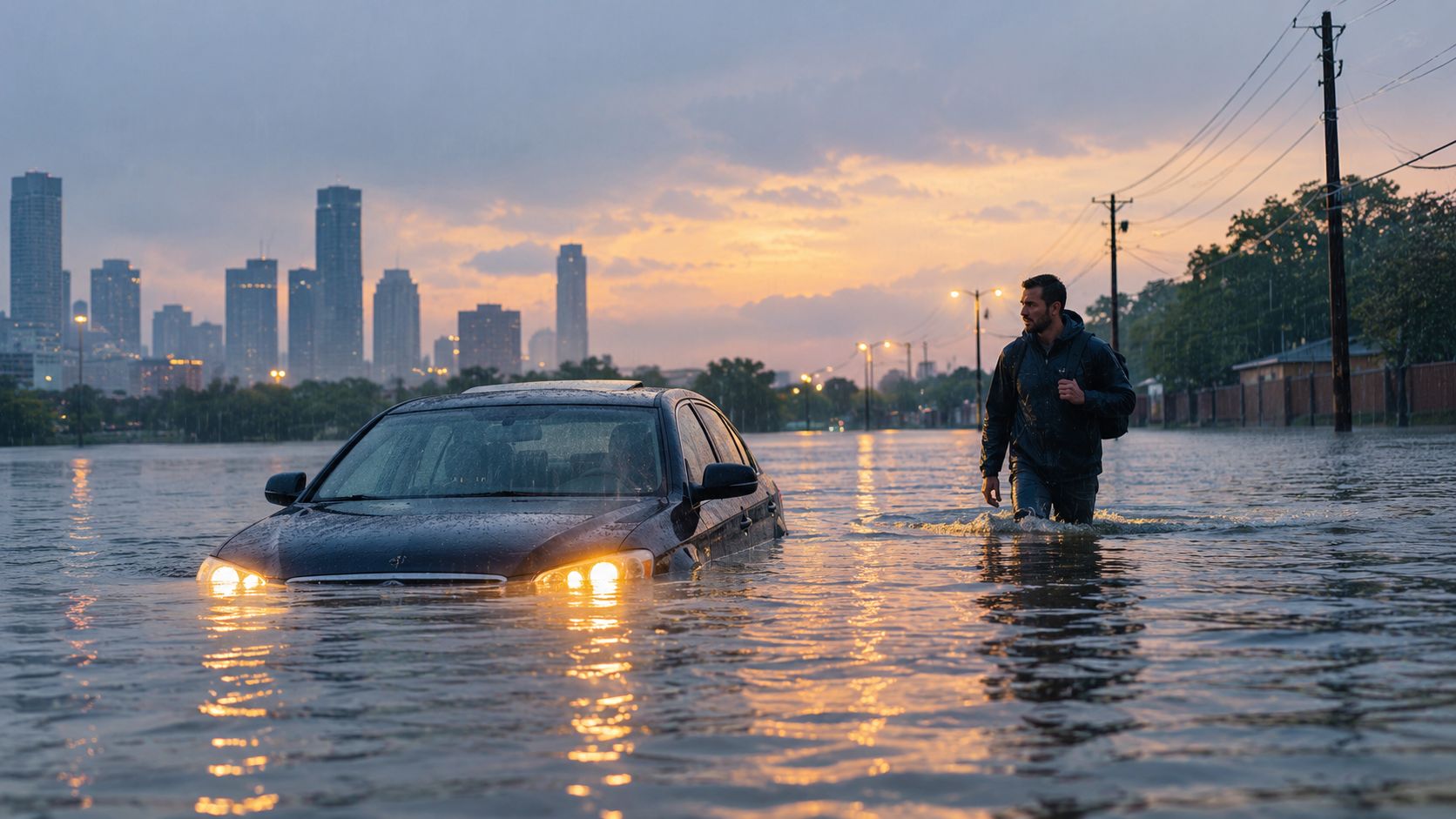
Your first priority is human life, not the vehicle. If water is rising around your car, try to leave the vehicle as soon as you can do so safely. Unbuckle your seat belt, help children or other passengers, open a window if possible, and move toward higher ground. Do not return for a phone, purse, documents, or other property.
Call 911 as soon as you're safe. Tell the dispatcher where the vehicle entered the water, whether anyone is injured or missing, and whether other vehicles or motorists are trapped. Your call can create an official record of the event, the roadway condition, and the need for emergency assistance.
Protect yourself before protecting the claim
Get medical attention even if you think your injuries are minor. A submerged-vehicle incident can involve impact injuries, breathing problems, cuts, exposure, and emotional trauma. Adrenaline can mask symptoms. Tell medical providers exactly what happened, including whether you were trapped, struck by another vehicle, pulled from the water, or exposed to contaminated floodwater.
If you can do so without returning to danger, preserve basic evidence:
- Photograph the scene safely. Take pictures of the vehicle, waterline, roadway, nearby signs, barricades, streetlights, and visible hazards. The Texas Department of Insurance recommends photographing a flooded vehicle while it's still submerged if possible, along with the damage afterward. See the agency's guidance on filing an auto claim for a flooded vehicle.
- Record what you remember. Write down the road you were on, the direction you were traveling, what you could see, whether warnings were visible, and how quickly the water rose. Memories fade quickly after a traumatic event.
- Identify witnesses. Ask other motorists, passengers, rescue workers, or nearby residents for their names and contact information if it's safe and appropriate.
- Avoid admissions. Don't tell another driver, an insurer, or a government representative that the crash was your fault. Give accurate facts, but don't guess about water depth, speed, or legal responsibility.
- Report the incident promptly. Texas insurance guidance emphasizes quick reporting and evidence preservation. You can also review this practical resource about what to do after a Houston car accident.
Safety rule: Never risk your life to obtain a photograph. Rescue, medical care, and safe evacuation come first.
A flood can damage more than the vehicle. If water entered your home or affected personal property, FullScope Pest Control Southeast Texas offers general post-flood information that may help you organize immediate cleanup and safety concerns. For your injury claim, keep every emergency record, photograph, receipt, and message connected to the incident.
Determining Liability for Houston Flooded Roadway Crashes
Many people assume that anyone who drives into floodwater automatically loses the right to seek compensation. That isn't the rule. A driver's decision matters, but it's only one part of the investigation.
Liability means legal responsibility for causing harm. In a Houston submerged-vehicle case, liability may involve the driver who caused a collision, a public entity that failed to address a dangerous roadway condition, a property owner whose drainage practices contributed to flooding, or a contractor whose defective work affected the road or drainage system.
Driver responsibility and secondary crashes
Suppose a Houston driver enters standing water and stalls on a roadway. Another motorist speeds around traffic, strikes the stalled vehicle, and causes a passenger's injuries. The first driver may face an argument that entering the water was negligent. The second driver may still be liable for failing to control speed, keep a proper lookout, or avoid the stopped vehicle.
That distinction is important. Floodwater can create an emergency, but it doesn't excuse every later driving decision. A stalled car, a reckless passing maneuver, a failure to maintain a safe distance, or an impact that pushes a vehicle into deeper water may each create separate questions about fault.
Government entities and dangerous road conditions
A city, county, or transportation agency may become relevant when poor drainage, missing barricades, inadequate warnings, or a known recurring hazard contributes to the incident. A notice question asks whether the responsible entity knew, or should have known, about the dangerous condition and had a reasonable opportunity to respond.
Evidence may include prior complaints, maintenance records, road-closure logs, warning procedures, drainage plans, photographs from earlier flooding, and witness accounts. A recurring flooded underpass with no visible warning presents a different investigation from a sudden, unforeseeable weather event.
Government claims are restricted by immunity rules and special procedures. The Texas Department of Insurance distinguishes a vehicle's flood claim from other legal issues, while Texas transportation guidance on pavement-condition claims illustrates why roadway-related claims require careful attention to the responsible agency and its process.

Property owners and contractors
A property owner may matter if blocked drainage, altered runoff, or neglected warning signs contributed to water entering the roadway. A third-party contractor may be involved if infrastructure work created or worsened the hazard. These cases turn on evidence, not assumptions.
A Houston car accident lawyer should examine the entire chain of events. That includes what happened before your vehicle entered the water, whether another driver caused a collision, what warnings were visible, and who controlled the roadway. For practical information about protecting an insurance claim, you can review Dealing With Insurers After a Houston Accident.
Navigating Auto Insurance Claims for Flood and Injury Damage
The most common mistake in these cases is treating vehicle damage and bodily injury as one claim. They're different claims with different questions.
Full coverage is the part of an auto policy that typically covers flood damage to your own vehicle. Liability coverage generally addresses injuries or property damage you cause to someone else when you're legally responsible. Texas Department of Insurance guidance states that flood damage is typically covered only when the policyholder has full coverage, while liability-only coverage doesn't cover flood damage to the policyholder's vehicle. Review the agency's flooded-vehicle insurance guidance.
| Coverage Type | What It Covers | Applies to Flood Damage? |
|---|---|---|
| Comprehensive coverage | Flood damage and other covered damage to your own vehicle | Typically yes, subject to the policy |
| Liability coverage | Injuries or repairs owed to another person when you're at fault | Generally no, for flood damage to your own vehicle |
| Another driver's liability coverage | Injuries or damage caused by that driver's negligence | It may apply when that driver caused the crash |
| Government or third-party claim | Injury damages tied to a legally responsible roadway or infrastructure condition | Requires proof of liability and compliance with applicable procedures |
Keep property and injury claims separate
An insurer may focus on the vehicle first because the damage is easy to inspect. That doesn't resolve your injury claim. A quick payment for a damaged car generally doesn't answer whether another driver, public entity, or property owner owes compensation for medical treatment, lost income, pain, or emotional harm.
Don't provide a recorded statement about your injuries without understanding what the insurer is asking. Don't sign a broad release just because an adjuster offers to resolve the vehicle damage. Read the documents carefully and keep copies of every estimate, letter, photograph, and payment.
Texas guidance also recommends reporting a flooded vehicle quickly and documenting the damage. For additional practical information, review how to report an accident to insurance. If a pedestrian was struck during the roadway emergency, Houston Pedestrian Accident Lawyer information may address the separate issues that arise in a pedestrian injury case.
You may also benefit from general tips from Eagle Restoration about organizing property-damage documentation. That type of material can help with records, but it doesn't replace legal advice about a bodily injury or government-liability claim.
Gathering Evidence and Documenting Your Submerged Vehicle Claim
Floodwater can erase tire marks, move debris, destroy signs, and change the appearance of a roadway. Your evidence should show what the scene looked like when the incident occurred, not only what it looked like after the water receded.
Start with the location. Photograph the intersection, underpass, shoulder, drainage points, road markings, nearby businesses, warning signs, barricades, and the path your vehicle traveled. If safe, capture the water level on the vehicle and the surrounding roadway. A photograph showing no warning device can matter, but so can evidence that a barricade was present and visible.

Build an evidence file
Create one digital and one physical folder. Add:
- Scene photographs: Keep the original files and note when and where you took them.
- Witness information: Save names, phone numbers, emails, and a short description of what each person saw.
- Vehicle records: Preserve towing invoices, storage notices, repair estimates, inspection reports, and photographs before the vehicle is cleaned or dismantled.
- Communication records: Keep emails, text messages, claim numbers, adjuster letters, and recorded-statement requests.
- Video evidence: Save dashcam footage, phone video, nearby surveillance information, and social-media posts showing the road condition.
- Medical documentation: Keep emergency records, prescriptions, therapy notes, bills, mileage, work restrictions, and information about missed work.
Do not discard damaged items unless a professional tells you to do so. Do not authorize destructive testing or major repairs before the relevant insurers and potential defendants have an opportunity to inspect the vehicle, unless immediate safety or storage concerns require action.
Connect the injuries to the event
Tell every medical provider that the condition began or worsened after the submerged-vehicle incident. Follow reasonable treatment instructions and explain any barriers that prevent you from attending appointments. Your file should show the injury, the treatment provided, the expenses incurred, and how the condition affects work, sleep, movement, family responsibilities, and daily activities.
An accident report can preserve important basic information. You can review this resource about obtaining an accident report in Houston, Texas. Reports don't decide liability by themselves, but they can help identify drivers, witnesses, responding agencies, and the initial description of the roadway.
Overcoming Defenses and Texas Comparative Fault Rules
Insurance companies and government entities often argue that the driver caused the entire event by entering the water. That defense may be powerful, especially when signs, barricades, or official warnings were visible. It isn't automatically conclusive.
Texas uses modified comparative fault under Chapter 33 of the Texas Civil Practice and Remedies Code. Comparative fault means the court assigns each responsible party a share of responsibility. Your damages are reduced by your percentage of fault, and Texas law bars recovery when your responsibility is greater than 50 percent. The governing statute is available through the Texas Legislature's Chapter 33 text.
How fault arguments develop
An insurer may ask whether you saw water, whether you could turn around, whether another car had already stalled, and whether a warning sign was visible. Those questions don't prove the answer. They identify facts that must be tested against photographs, witness accounts, roadway design, lighting, traffic conditions, and the timing of any warning or closure.
Consider two different examples. A driver passes a clearly visible barricade and enters deep water despite a direct warning. In another case, a driver approaches a dark underpass where the road appears open, no barrier is visible, and the water becomes deep only after the vehicle descends. The legal analysis can be very different.
A flood claim should not be reduced to one question, “Why did you enter the water?” The investigation must also ask what the roadway owner knew, what warnings were provided, and whether another person's conduct caused the injury.
Government deadlines matter
Governmental immunity can limit when and how you pursue a claim against a city, county, or other public entity. Notice requirements may be strict, and the responsible agency must be identified correctly. Waiting for an insurance adjuster to finish reviewing vehicle damage can jeopardize a separate claim against the government.
Texas law also imposes a two-year statute of limitations for most car-accident injury claims and many auto property-damage claims, as explained by the State Bar of Texas discussion of accident deadlines. A statute of limitations is the legal deadline for filing a lawsuit. It isn't a suggestion, and settlement discussions don't make it safe to ignore.
Chapter 33 addresses shared responsibility. Chapter 41 addresses exemplary damages in appropriate cases involving conduct beyond ordinary negligence. Those damages aren't available in every crash, and the facts must support the legal standard. Your attorney should evaluate the evidence before making that demand.
Calculating Damages and Securing Your Future
Damages are the financial and personal losses caused by an injury. In a flooded-roadway case, they may include reasonable medical expenses, future treatment, lost wages, reduced earning ability, vehicle-related losses, physical pain, emotional distress, and the effect of the injury on your daily life.
Property coverage may address the flooded vehicle, but it doesn't fully address what happens to you after the crash. A back injury can affect your ability to work. A traumatic rescue can affect sleep and confidence. A serious injury can require treatment long after an insurer has inspected the car.
Keep a complete record of your losses. Save bills and receipts, but also document nonfinancial effects. Ask your doctor about expected treatment and limitations. Keep pay records and work communications showing missed time or changed duties. If medical bills involve liens or payment arrangements, information about how professionals manage medical liens for PI cases may help you understand the importance of resolving those obligations carefully.
Families facing a fatal submerged-vehicle incident may have a wrongful death compensation claim. Wrongful death damages can involve the family's financial losses, the relationship with the person who died, and other losses recognized by Texas law. These cases require immediate attention because evidence disappears and family members may face urgent financial pressure.
You don't have to decide the value of your claim while you're still in pain. A Texas injury attorney can investigate the roadway, preserve evidence, identify responsible parties, address insurance coverage, and explain whether a settlement protects your future. The Law Office of Bryan Fagan, PLLC handles Texas personal injury matters involving car crashes, serious injuries, and wrongful death claims, with free consultations and contingency-fee representation described by the firm.
The Law Office of Bryan Fagan, PLLC can review your flooded roadway injury, auto insurance claim, or wrongful death case and help identify whether another driver, insurer, or government entity may be responsible. Contact the firm for a free consultation by visiting The Law Office of Bryan Fagan, PLLC, so you can protect evidence, understand your deadlines, and take the next step toward recovery.


