A car crash can change your life in seconds, but you don't have to face recovery alone. If you're reading this after a pileup on I-45, the Sam Houston Tollway, or another Houston roadway, you may still be dealing with shock, pain, unanswered questions, and calls from insurance adjusters. You may not know which driver caused the first impact, whether more than one policy applies, or how you'll pay for treatment while you're unable to work.
A Houston multi-vehicle pileup lawyer can help protect the evidence, identify every potentially responsible driver, evaluate uninsured and underinsured motorist coverage, and pursue compensation for your injuries and losses. The decisions you make during the first hours and days matter, but you don't have to make them alone.
What a Multi-Vehicle Pileup Looks Like in Houston
You're driving through Houston traffic when the vehicles ahead suddenly brake. One car slides, another driver swerves, and a truck strikes the vehicle behind you. A second impact pushes that vehicle into yours. Sirens approach, airbags hang open, glass covers the roadway, and everyone is trying to remember what happened first.
That confusion is normal. In a pileup, your vehicle may be hit more than once, and the driver who caused your injuries may not be the person whose vehicle made the final contact. A driver who stopped safely may still be pushed into another car. A passenger may have no idea which impact caused a spinal injury or head trauma. The police report may provide an initial account, but it usually isn't the complete answer.
Houston's collision environment makes these cases especially important. The city recorded 66,236 crashes in 2024, including 58,263 multi-vehicle collisions, according to Houston Vision Zero crash data. That figure shows why chain-reaction crashes aren't rare edge cases in the region.
Your first job is safety and medical care. Your second is preserving the facts before vehicles move, debris disappears, and memories change.
You can learn more about how different impacts affect injuries and claims in this guide to car crash types in Houston. The central point is simple: don't assume the nearest vehicle or the last driver in the chain is automatically responsible. A careful investigation must work backward through each impact.
Key Texas Legal Terms in Plain English
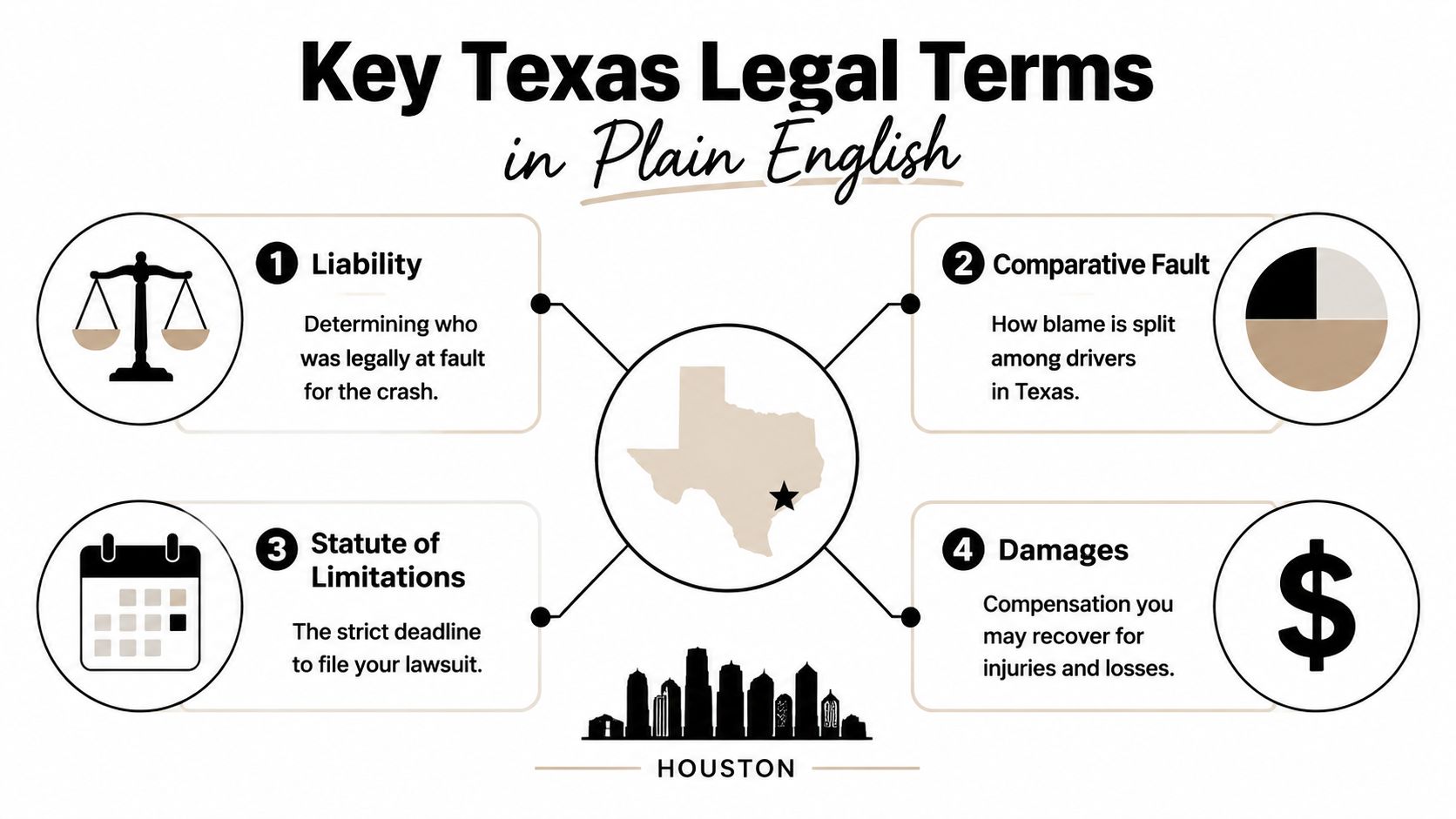
Liability means legal responsibility for causing harm. In a Houston freeway pileup, liability may rest with a driver who followed too closely, entered traffic recklessly, failed to control speed, or created the first dangerous impact. A lawyer must connect that conduct to your injury and show how the crash sequence unfolded.
Comparative fault means blame can be divided among the people involved. Texas Civil Practice and Remedies Code Chapter 33 uses a modified comparative fault rule. You may recover when your responsibility is 50% or less, but you're barred from recovering damages when your responsibility is greater than 50%, as explained in Texas proportionate responsibility law. If you were assigned part of the blame, your recovery can be reduced by that share.
Damages are the losses a legal claim may seek to address. They can include medical treatment, future care, lost income, reduced earning ability, physical pain, emotional suffering, and the effect an injury has on your daily life. In a fatal crash, eligible family members may pursue wrongful death compensation for losses connected to the death.
The statute of limitations is the deadline for filing a lawsuit. Texas generally gives an injured person two years to file a personal injury lawsuit, and the same two-year period is commonly used for wrongful death claims measured from the date of death, according to this Texas limitations overview. Waiting can cost you the right to bring a claim, even if the evidence is strong.
The same legal framework may apply differently depending on whether you were a driver, passenger, pedestrian, or cyclist. For example, a Houston Pedestrian Accident Lawyer page addresses representation for pedestrians struck by vehicles in Houston.
What to Do Right After a Houston Pileup
Start with safety. If you can move without worsening an injury, get away from moving traffic and watch for fire, leaking fuel, unstable vehicles, and additional impacts. Call 911 and tell the dispatcher where the crash occurred, how many vehicles are involved, and whether anyone appears trapped or seriously hurt.
Accept medical evaluation even if your pain seems minor. Adrenaline can mask symptoms, and some injuries become clearer later. Tell the medical provider every symptom, including headache, neck pain, dizziness, numbness, back pain, chest discomfort, and confusion. Follow the recommended care plan, because your records help show both the injury and its connection to the crash.
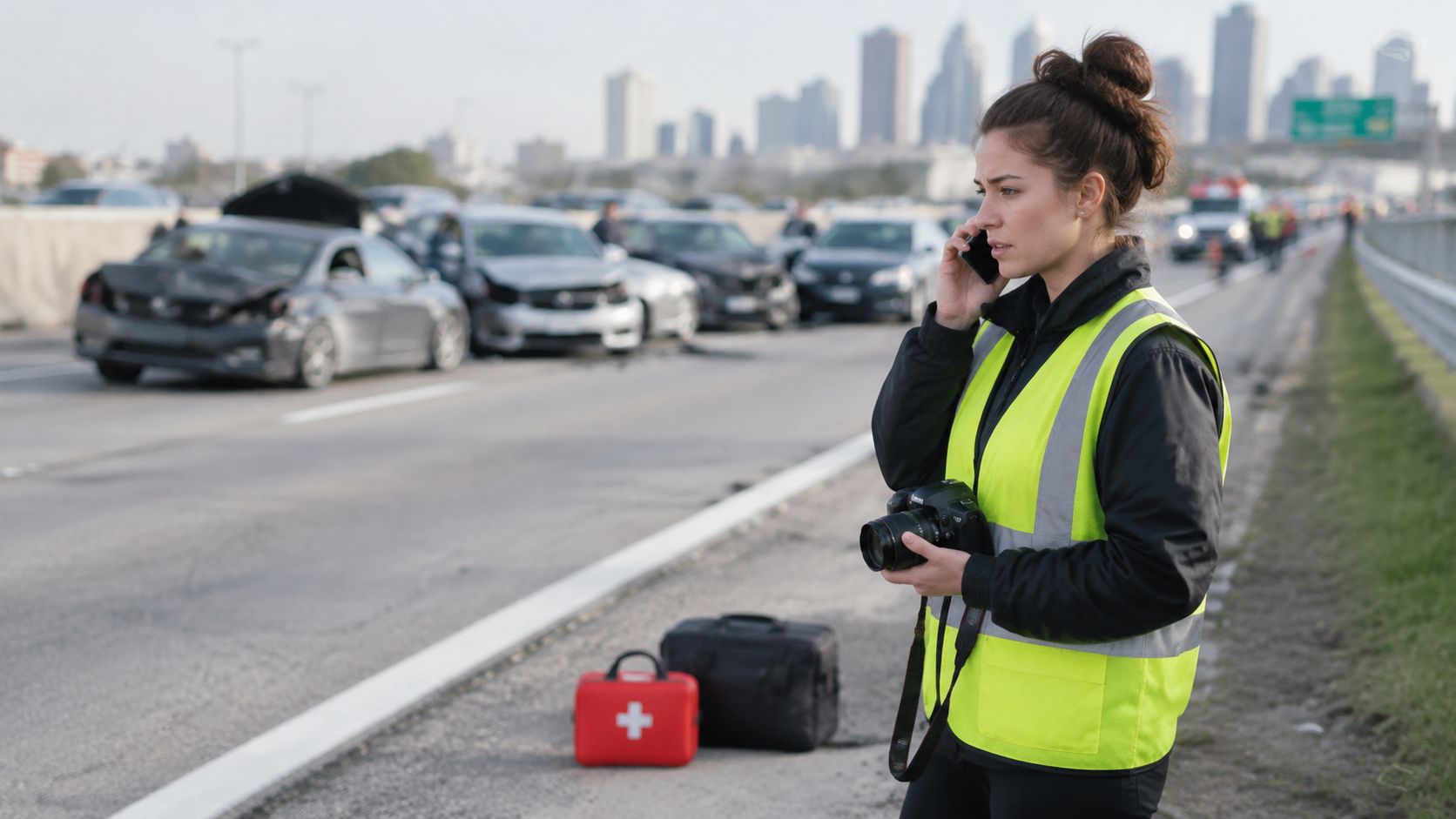
If you're physically able, take photographs from a safe location. Capture the vehicles involved, visible damage, lane positions, road surface, weather, signs, traffic controls, tire marks, and debris. Don't put yourself in danger to get a picture. Ask witnesses for their names and contact information, and exchange insurance details with the other drivers without arguing about fault.
During the first few days, notify your own insurer that a collision occurred, but keep the report factual and limited. Don't guess about speed, distance, or the order of impacts. Don't give a recorded statement to another driver's insurer or sign a release before speaking with a lawyer.
Use this guide to what to do after a car accident as a practical reminder, but prioritize emergency care and safety over collecting evidence.
How a Houston Lawyer Proves Fault in a Chain-Reaction Crash
A pileup investigation should begin with the first dangerous event, not just the final damaged vehicle. The lawyer asks what caused the initial loss of control, which vehicles had time to react, and whether later impacts were unavoidable or created by additional negligent conduct.
Starting with the physical evidence
Scene photographs preserve details that can disappear quickly. Skid marks may help show braking and direction. Debris fields can identify where impacts occurred. Vehicle damage patterns may reveal impact angles, relative movement, and whether a vehicle was struck before it hit someone else.
Dashcam footage, traffic-camera video, and witness statements can help establish timing. One witness may remember a truck changing lanes. Another may have seen a vehicle stopped before the first impact. Those accounts become more useful when compared with vehicle damage and roadway evidence.
Event data recorder, or EDR, information may provide additional information about speed, braking, and other vehicle inputs before a collision. A lawyer must act quickly to request preservation of vehicles and electronic evidence, especially when a commercial truck, rideshare vehicle, or company vehicle is involved.
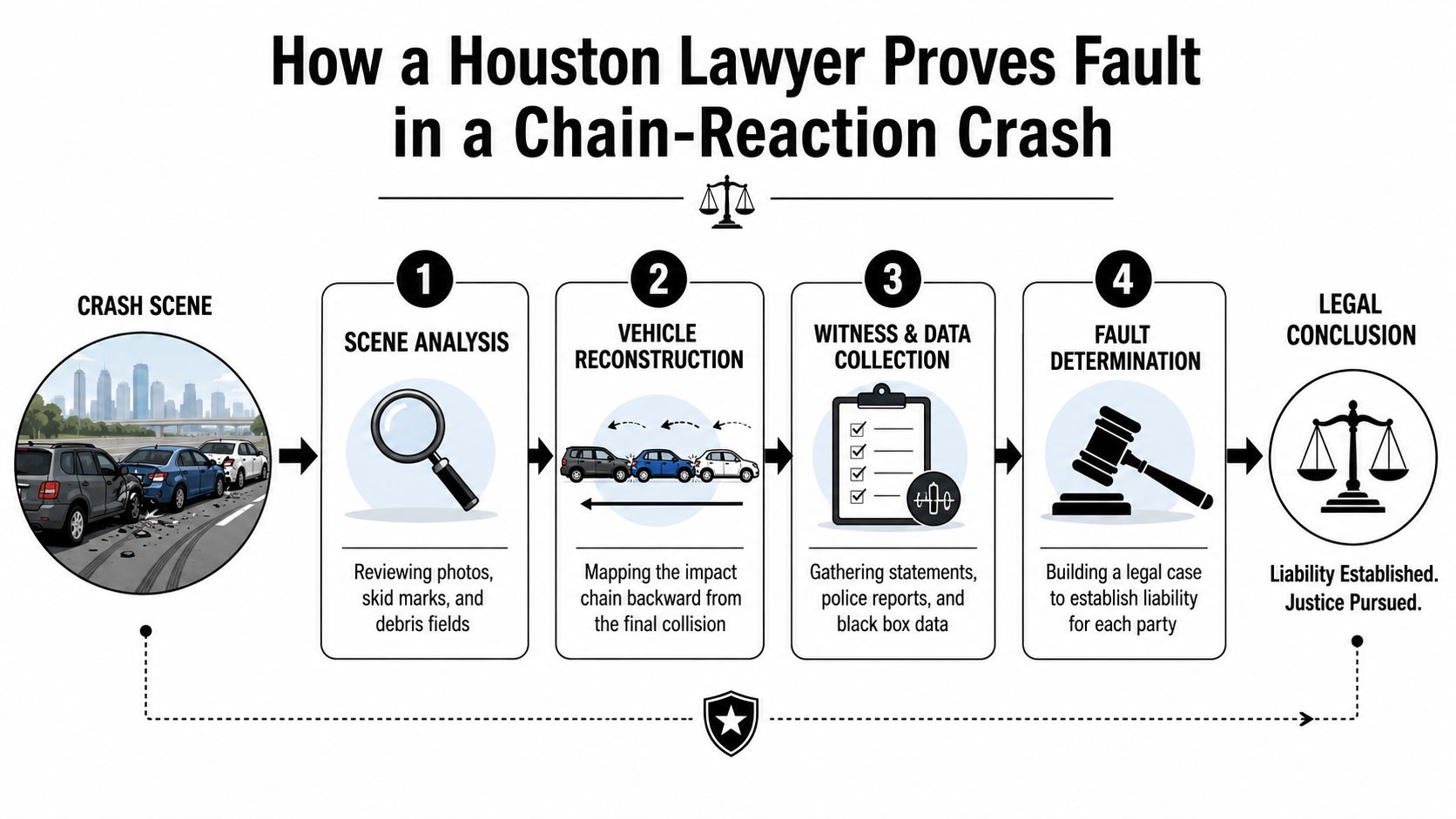
A reconstruction professional can combine these sources into a sequence. The analysis may show that the first driver caused the hazard, a second driver had enough distance to stop but didn't, and a third driver was pushed into the chain despite taking reasonable action. Those distinctions matter when a jury assigns comparative fault.
The evidence commonly used in this process includes scene photos, skid marks, debris fields, vehicle damage, video, witness statements, and EDR data. Each piece answers a different question, and the strongest cases connect them into one consistent explanation.
Consider a rear-end truck crash on a Houston freeway. The front driver may have stopped because of traffic. A commercial truck may have failed to slow, causing the first heavy impact. If that impact pushed several vehicles forward, the investigation must separate the truck's initial conduct from later contacts and determine whether any other driver contributed.
Splitting Blame and Coverage Across Multiple Drivers
The difficult question often isn't only, “Who caused the pileup?” It's, “Which policies can pay for my injuries?” A claimant may prove that several drivers contributed to the crash and still face a collection problem if one driver carries little insurance or another has no insurance at all.
Texas uses proportionate responsibility. A claimant can recover when assigned 50% fault, but cannot recover under the rule when assigned 51% fault. Each defendant typically pays only that defendant's assigned share, so proving liability doesn't automatically guarantee full collection. The mechanics are discussed in this comparative fault explanation.
A coverage example
Suppose a passenger suffers serious injuries in a three-vehicle pileup. One driver caused the first impact but has limited liability coverage. A second driver contributed to the chain but has no insurance. The passenger may pursue claims against the responsible drivers and also examine the passenger's own available uninsured or underinsured motorist coverage.
UM coverage can apply when a responsible driver has no insurance. UIM coverage may help when the responsible driver's insurance isn't enough to cover the loss. The policy language, exclusions, consent requirements, and claim history matter. Don't assume your insurer will volunteer every available option.
“Stacking” also requires careful policy review. Whether coverage can be combined depends on the policies, vehicles, insureds, and Texas law that applies to the particular claim. A lawyer should identify every potentially available policy before you sign a settlement that could release a claim against another carrier.
| Driver | Assigned Fault | Liability Limit | What They Pay |
|---|---|---|---|
| Driver who caused the first impact | Assigned after evidence review | Depends on the policy | Typically pays that driver's allocated share, up to available limits |
| Driver who contributed to later impacts | Assigned after evidence review | Depends on the policy | Typically pays that driver's allocated share, up to available limits |
| Uninsured driver | Assigned after evidence review | No liability policy available | May create a UM claim under an applicable policy |
| Injured passenger's insurer | Not a negligent driver | Depends on UM/UIM coverage | May provide available UM/UIM benefits after policy requirements are met |
The practical lesson is important: fault and coverage are separate investigations. Your Texas injury attorney should build the liability case while also reviewing declarations pages, policy limits, exclusions, household policies, employer coverage, and any UM/UIM provisions.
Compensation You Can Pursue After a Pileup
Damages are the financial losses and personal harms connected to the crash. Economic damages may include emergency care, hospital treatment, rehabilitation, medication, future medical needs, lost wages, and reduced earning capacity. Keep bills, receipts, work records, and appointment information because each can help document the claim.
Non-economic damages address losses that don't come with a simple invoice. They may include physical pain, mental anguish, disfigurement, loss of enjoyment of life, and the effect the injury has on relationships and ordinary activities. A severe injury can change how you sleep, work, drive, care for children, or participate in hobbies.
In a fatal pileup, eligible family members may pursue wrongful death compensation. The value and scope of that claim depend on the family relationship, the evidence of financial and personal loss, and the responsible parties and coverage available.
Texas Civil Practice and Remedies Code Chapter 41 governs exemplary damages and related limits. A widely cited limit generally places exemplary damages at the greater of two times economic damages plus an amount equal to non-economic damages, or $200,000, as provided in Chapter 41 of the Texas Civil Practice and Remedies Code.
Don't value a serious claim from the first medical bill. Future care, work limitations, and daily suffering can matter just as much.
For example, a driver with a spinal injury may have current treatment bills, ongoing therapy, time away from work, and limitations that affect future employment. A proper claim gathers medical opinions and employment evidence instead of accepting a quick amount based only on expenses already paid.
Why Choosing The Law Office of Bryan Fagan Matters
A pileup needs more than a quick liability opinion. The lawyer must preserve vehicles and electronic evidence, analyze the impact sequence, challenge unsupported fault assignments, and identify every applicable insurance policy. That work becomes especially important when a truck, rideshare vehicle, delivery driver, passenger, or uninsured motorist is part of the crash.
The Law Office of Bryan Fagan, PLLC is a Texas-based personal injury firm serving Houston, Dallas–Fort Worth, Austin, San Antonio, and surrounding communities. The firm handles rear-end, T-bone, head-on, multi-vehicle, rideshare, and trucking crashes, along with uninsured and underinsured motorist disputes and fatal accident claims.
Its contingency-fee model means you don't pay attorney fees unless the firm wins your case. That arrangement allows you to seek legal help while dealing with medical treatment, vehicle damage, missed work, and difficult insurer communications.
The firm's approach combines negotiation with trial-tested courtroom advocacy. That matters when an insurer disputes the first impact, assigns too much blame to you, undervalues future damages, or refuses to address available UM/UIM coverage. The firm also handles related Houston car accident claims for victims and families dealing with serious collisions.
A lawyer can't promise a particular result. A careful investigation can give you a clearer picture of liability, damages, deadlines, and realistic recovery options.
Next Steps and Common Questions for Houston Pileup Victims
Start by getting medical care, preserving every document, notifying your insurer carefully, and avoiding recorded statements about fault or injury until you've received legal guidance. Don't let several drivers and insurance companies push you into treating the crash as a single simple claim. The first impact, comparative fault allocation, coverage limits, and UM/UIM provisions can all affect what you collect.
How soon should I call a lawyer?
Call as soon as you're medically safe, particularly if the crash involved several vehicles, serious injuries, a commercial vehicle, a death, or disputed fault. Early legal help gives counsel time to preserve vehicle data, locate witnesses, request video, and review insurance policies before evidence is lost.
What if the at-fault driver has no insurance?
Ask your own insurer about UM coverage and provide the crash information required by your policy. If another driver has insufficient coverage, UIM benefits may also matter. Don't accept a settlement or sign a release before confirming whether other responsible drivers and policies remain available.
How long will a Texas pileup case take?
There's no fixed timeline. A case may resolve through negotiation, mediation, or litigation, and serious injuries or disputed liability can make the process longer. Your lawyer should explain the investigation, treatment, demand, negotiation, and lawsuit stages as the facts develop.
Can family members recover after a death?
Potentially, yes. Texas law may allow eligible family members to pursue a wrongful death claim when negligence caused a loved one's death. The claim can involve financial and personal losses, and the two-year period commonly used for wrongful death claims is measured from the date of death, according to the Texas statute of limitations overview. Speak with counsel promptly because evidence and legal deadlines can affect the family's rights.
If you or someone you love was hurt in a Houston pileup, schedule a free consultation with a Houston multi-vehicle pileup lawyer before discussing settlement or giving a recorded statement. Bring the crash report, medical records, photographs, insurance information, and every letter or message from an insurer if you have them.
The Law Office of Bryan Fagan, PLLC offers free consultations and contingency-fee representation for Houston pileup victims, including help with chain-reaction liability, comparative fault, UM/UIM coverage, and wrongful death claims. Visit The Law Office of Bryan Fagan, PLLC to discuss what happened and learn what steps can protect your recovery.