 Skip to content
A car crash can change your life in seconds, but you don't have to face recovery alone.
If you're reading this after a late-night wreck on I-45, Westheimer, or some other Houston road, you're probably doing the same thing most injured people do. You're trying to figure out whether the other driver had been drinking, whether your pain is serious, and whether the insurance company is already trying to shape the story before you've even had a chance to breathe.
A Houston drunk driving accident lawyer should do more than file forms. The right lawyer moves fast on evidence, looks for every liable party, and pushes back when an insurance adjuster tries to pay you less than your case is worth. Texas law gives you tools, but it also gives the other side time to hide evidence, minimize injuries, and blame you for a crash you didn't cause.
What to Do After a Suspected Drunk Driving Crash in Houston
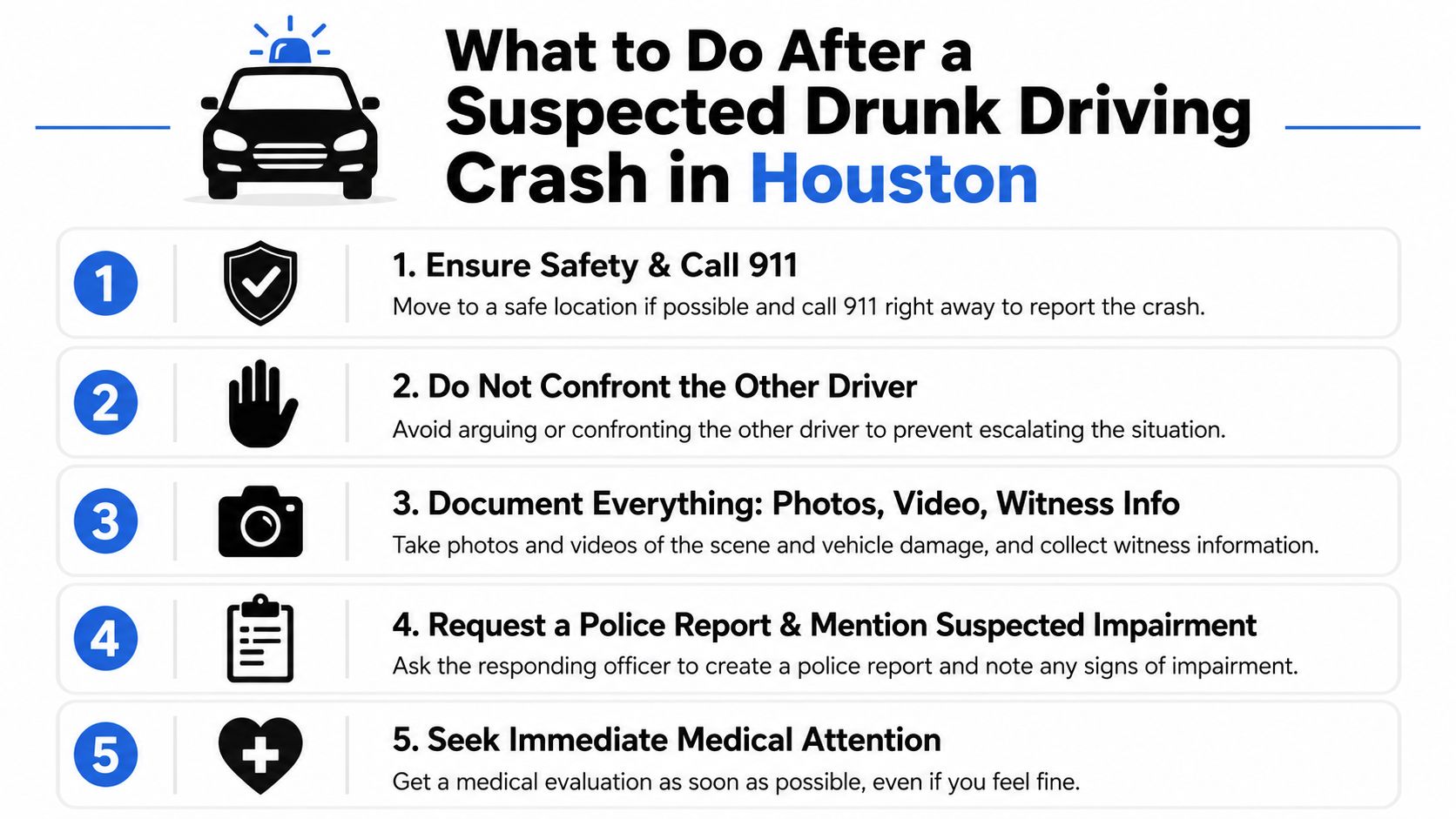
A Houston driver gets hit at night, pulls over with shaking hands, and smells alcohol on the other driver before the police even arrive. That moment matters. Your next few decisions can help protect your health and your claim, or they can give the defense room to rewrite what happened.
Call 911 and ask for medical help
Call 911 right away and ask for law enforcement and emergency medical response. If you suspect impairment, say so plainly so it can be noted in the police crash report. One Houston legal resource specifically recommends reporting suspected intoxication to the officer, because that detail can matter later in the claim (crash reporting guidance).
Do not argue with the other driver. Do not apologize. Do not guess about your injuries at the scene.
Practical rule: If you think the other driver is impaired, let the officer document it. Your job is to stay safe and create a clean record, not to win the argument in the street.
Get checked even if you feel “okay”
Get medical care as soon as you can, even if you think the pain is minor. Adrenaline can hide symptoms, and early treatment creates the medical record your auto insurance claim will depend on later. A victim who waits too long gives the insurer a reason to argue the injuries came from something else.
Take photos of the vehicles, the road, any skid marks, and the other driver if you can do that safely. Get names and phone numbers for witnesses before they leave. Those details can matter months later when the insurer starts denying fault.
Save everything, including the tow slip, the police case number, and any texts from witnesses. If you were hit in a rideshare or while driving for work, keep the app open and screenshot the trip details before they disappear. If you need a Houston car accident lawyer, you can also review this local resource on drunk driving accident claims in Houston while the evidence is still fresh.
How Liability Works Under Texas Negligence and Dram Shop Laws
Texas injury cases start with one question, who is legally responsible for the crash. In plain English, liability means legal responsibility. In a drunk driving case, the drunk driver is the obvious defendant, but Texas law does not stop there.
Under Texas negligence law, a driver is negligent when they fail to use reasonable care and that failure causes harm. A drunk driver who gets behind the wheel after drinking usually fits that rule. Texas Civil Practice and Remedies Code Chapter 33 also matters because it uses comparative fault, which means your recovery can be reduced if a jury says you share part of the blame. If you are found more than 50% at fault, you cannot recover.
Damages are the losses you can seek, such as medical bills, lost wages, pain, and other harm. The statute of limitations is the deadline for filing suit. One Houston legal source says Texas plaintiffs generally have two years from the date of the injury to file a personal injury lawsuit.
Don't stop at the driver
Texas also allows claims against bars, restaurants, or event hosts in certain situations under dram shop law. If a licensed establishment served a person who was visibly intoxicated and that person later caused the crash, the business may share responsibility. Texas Civil Practice and Remedies Code Chapter 41 can also matter because exemplary damages may be available in gross negligence cases.
That third-party claim often changes the value of the case. If the drunk driver carries little insurance, the bar, restaurant, or event host may be the only realistic path to additional coverage. For families dealing with a fatal crash, Houston Wrongful Death Lawyer representation is often part of the discussion because the claim can shift from injury losses to wrongful death compensation.
| Potential Defendant | Legal Theory | Type of Recovery |
|---|---|---|
| Drunk driver | Negligence | Medical bills, lost income, pain and suffering |
| Bar, restaurant, or event host | Dram shop liability | Additional insurance coverage, broader compensation |
| Employer or work-related carrier | Vicarious or coverage-based liability | Commercial policy benefits, workplace-related recovery |
The Texas dram shop issue deserves a close look, not a quick assumption. The dram shop law in Texas only helps if the facts support it, but when it applies, it can change the entire case.
Preserving Evidence Before It Disappears
The first 24 to 72 hours after a suspected drunk driving crash are critical because evidence gets erased fast. 911 audio gets archived, body-cam footage can become harder to obtain, and bar surveillance video may be overwritten before anyone sends a preservation request. That is why a Texas car accident lawyer treats early evidence work as the most important task in the file.

When a crash involves a rideshare, delivery, or work driver, the data problem gets worse. App screenshots, trip logs, dispatch records, and employer records can disappear or become harder to access. A strong case often depends on getting that information before the platform or employer changes logs, not after.
If you wait to preserve the evidence, you may be left arguing about memory instead of facts.
A lawyer should send spoliation letters quickly, asking the other side and any third party to keep video, paper records, and digital data. That includes bar tabs, witness statements, and any footage showing the driver before the wreck. If a Houston car accident lawyer is not talking about preservation on day one, that's a problem.
For a closer look at how accident records are handled in Houston, this local page on the accident report process in Houston is useful background. The point is not paperwork for its own sake. The point is controlling the story before the other side does.
If the crash happened near a bar, restaurant, or venue, get receipts, names of staff if you have them, and any witness who saw the driver drinking. Those records can support a third-party claim when the driver's own insurance isn't enough. A careful investigation often starts with one simple question, who saw what, and when did they see it?
Working With a Houston Drunk Driving Accident Lawyer
You need a first meeting that is organized and direct. Bring the crash report if you have it, photos, medical records, insurance letters, and any names or numbers you collected at the scene. If the crash killed someone, bring every document you have and ask how a wrongful death claim fits with the rest of the case.

What the lawyer should do for you
A good lawyer gets to work on the crash, identifies every insurance layer, and handles adjusters so you do not have to. In drunk driving cases, that means looking past the drunk driver's policy and checking whether a bar, restaurant, employer, or rideshare platform may also belong in the case. That matters when the claim involves both civil liability and a related criminal case against the driver.
A contingency-fee case means you do not pay up front, and you do not pay at all unless the firm recovers money for you. That setup lets injured people get help without adding another bill while they are already dealing with treatment and missed work. It also keeps the lawyer focused on case value, not hourly billing.
If you want one option to compare while you sort through your choices, The Law Office of Bryan Fagan, PLLC handles Houston injury claims on a contingency-fee basis and works through liability, damages, and coverage disputes for crash victims.
Ask who will handle your file day to day, how often you'll get updates, and whether the firm will pursue third-party liability if the facts support it.
The lawyer should also give you a straight answer about settlement timing. Drunk driving cases take time because evidence has to be preserved, medical treatment has to develop, and insurers usually do not offer fair money early. If a firm promises a guaranteed result, walk away. In the right case, the same investigation that helps prove fault can also help you win your diminished value claim, especially when the crash damaged a newer vehicle or left repair records that hurt resale value.
Compensation You Can Pursue and Realistic Settlement Ranges
Texas law lets injured people seek compensation for medical bills, lost wages, future earning capacity, pain and suffering, and, in the right case, exemplary damages for gross negligence. In a fatal crash, the family may pursue wrongful death compensation and related losses through a separate claim. The central question is where the money is coming from, because that drives how much a case is worth.
| Case Scenario | Typical Range | Key Driver of Value |
|---|---|---|
| Driver-only claim | $30,000 to $150,000 | Insurance limits and injury severity |
| Bar-liability claim | $500,000 to $2 million+ | Extra defendant and broader coverage |
| Multi-vehicle case | $50,000 to $750,000 | Number of vehicles, fault clarity, injuries |
Those ranges are not promises. They are practical benchmarks from Houston practice materials showing how value changes when more coverage is available and fault is clearer, as noted in Houston practice guidance and multi-vehicle settlement guidance. A weak claim with a single low-limit policy looks very different from a case with a liable establishment or several vehicles involved.
The same local materials also note that multi-vehicle matters can stretch over a longer period while the parties sort out fault, coverage, and damages. That is why the first settlement offer is rarely the full value. An insurance company wants to settle before your treatment is complete and before the full picture of your losses is documented.
If your vehicle was damaged badly, don't ignore the value drop issue either. A separate appraisal may help you win your diminished value claim, especially when the crash left lasting resale harm. That matters in a claim built around total loss, repair, and long-term financial impact.
Mistaking the first offer from an adjuster for the case's true value is a critical error. A proper evaluation hinges on liability, insurance coverage, the strength of medical evidence, and whether any parties other than the driver bear responsibility. In a drunk driving case, that often means checking for dram shop liability, especially when a bar, restaurant, or event host overserved the driver and has deeper coverage than the driver's policy alone.
Texas Deadlines and Insurance Tactics to Watch For
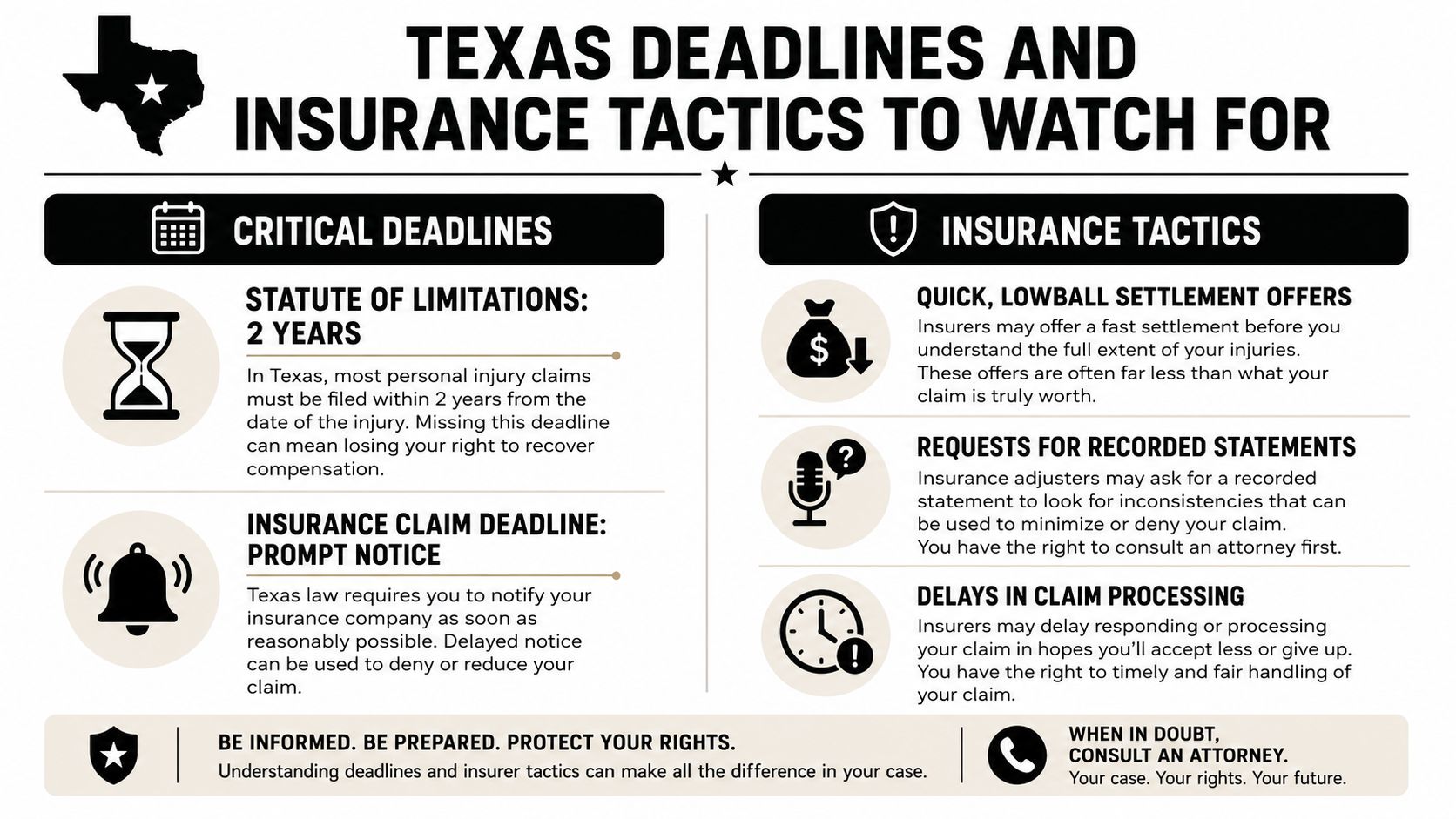
The two-year filing deadline sounds generous until you are dealing with treatment, records, and calls from insurance adjusters. Texas generally gives injured victims two years to file personal injury or wrongful death claims after a drunk driving crash. That said, waiting is a mistake because the evidence that helps these cases most often disappears early.
What insurers try to do
Adjusters usually push for a recorded statement before you know how bad the injuries really are. They may offer quick money before treatment is finished, then later act like that number should settle the case. They may also blame you for not wearing a seatbelt or for being out late.
Give only the basics. Report the crash, keep your answers short, and let your lawyer take over the back-and-forth. Once a Texas injury attorney is on the file, the insurer should be talking to counsel, not to you.
The first offer is usually designed to close the claim cheap. It is not a fair measure of a case that still has medical care, wage loss, property damage, and possible third-party liability still being sorted out. In a drunk driving crash, that third-party angle can matter more than people expect, especially if a bar, restaurant, or event host overserved the driver and has deeper coverage than the driver alone.
Questions to ask before you sign
- Do you handle drunk driving cases, not just general wrecks?
- Will you investigate dram shop liability and other third parties?
- Who speaks to the insurance company after I hire you?
- How do you handle uninsured and underinsured motorist issues?
- What will you need from me in the first week?
If a lawyer cannot answer those questions clearly, keep looking. The right Houston drunk driving accident lawyer should explain deadlines, coverage, and evidence control in plain English, and should be able to tell you whether the case has a path beyond the driver's policy without hedging.
How to Choose the Right Houston Drunk Driving Accident Lawyer
Choose the lawyer who talks about evidence, coverage, and deadlines without spinning you in circles. You want someone who has handled drunk driving claims, knows how dram shop cases work, and can explain the difference between the driver's policy and any third-party coverage that might apply. You also want a lawyer who tells you the truth about timing, because a rushed case usually settles cheap.
Ask who will work the file day to day, how often you'll get updates, and whether the firm handles insured and uninsured motorist disputes. If the answer stays vague, that's a red flag. So is any promise of a guaranteed outcome, because no honest Texas injury attorney can promise that.
Start with the basics, then move to the harder questions. Ask about wrongful death claims if you lost a loved one, rideshare or delivery coverage if the vehicle was working, and how the firm keeps surveillance and app data from disappearing. Those details separate a general auto accident shop from a team that knows how to build a real Houston drunk driving case.
If you want to keep learning, look at related issues like rideshare crashes, delivery driver claims, wrongful death compensation, and uninsured motorist disputes. Those topics often connect directly to the same wreck. The right next step is simple, get your questions answered now, while the evidence is still there and the deadline is still manageable.
If you were hurt in a drunk driving crash, The Law Office of Bryan Fagan, PLLC can review the collision, identify every liable party, and deal with the insurance company for you. Visit The Law Office of Bryan Fagan, PLLC to schedule a free consultation and get clear advice about your next move.


