A car crash can change your life in seconds, but you don't have to face recovery alone. If you're sitting at home after a collision on I-45, dealing with pain, medical bills, vehicle damage, or calls from an insurance adjuster, you may not know what to do first. The right steps can protect your health, preserve important evidence, and give you a clearer path forward.
This guide explains what matters after an accident on the Gulf Freeway, including evidence that can disappear during lane closures, fault disputes involving several drivers, uninsured or underinsured motorist coverage, and Texas filing deadlines. Whether you need a Houston car accident lawyer, a Texas injury attorney, or information about an insurance claim, practical legal help is available.
A Crash on the Gulf Freeway Can Change Everything
You're driving south through Houston when traffic suddenly compresses. A vehicle changes lanes, another driver brakes, and your car is struck before you have time to react. Within moments, you may be facing a damaged vehicle, shoulder pain, confusion, and several different drivers offering conflicting versions of what happened.
That situation is common in the sense that the Gulf Freeway has carried heavy, high-speed traffic for generations. Houston's Gulf Freeway became the city's first freeway after the Texas Transportation Commission designated the route in 1943. Its first segment opened on September 30, 1948, the Houston-to-Galveston connection was dedicated in 1952, and the full route to Galveston met freeway standards by 1976. The corridor's history helps explain why a crash there can involve complex traffic patterns, roadway features, commercial vehicles, and several potentially responsible parties. Houston Chronicle's history of the Gulf Freeway provides additional context.
The human cost can be severe. Texas recorded 3,769 motor-vehicle traffic deaths in 2025, while one person was injured every 2 minutes 9 seconds on Texas roads that year, according to TxDOT's 2025 Texas Motor Vehicle Traffic Crash Facts. A Houston crash summary reported 66,236 crashes and 339 fatalities in 2024, which shows why Gulf Freeway claims often involve serious injuries and disputed responsibility.
Your situation deserves more than a quick insurance answer
An accident on Gulf Freeway lawyer should look beyond the visible damage. The investigation may need to address lane closures, debris, road design, traffic-camera footage, vehicle positions, police records, commercial-driver activity, and the actions of every driver involved.
Families dealing with a fatal collision may also need help understanding the difference between the medical cause of death and the legal facts surrounding responsibility. A resource on understanding cause vs manner of death can help explain those terms.
You don't need to solve the entire case today. You do need to protect your health, avoid harmful statements, save evidence, and get advice before an insurer tries to define the claim for you.
What to Do Immediately After a Gulf Freeway Crash
A crash on I-45 can become more difficult to investigate once traffic crews clear lanes, tow vehicles, or separate drivers. Protect your safety first, then preserve evidence before the scene changes.
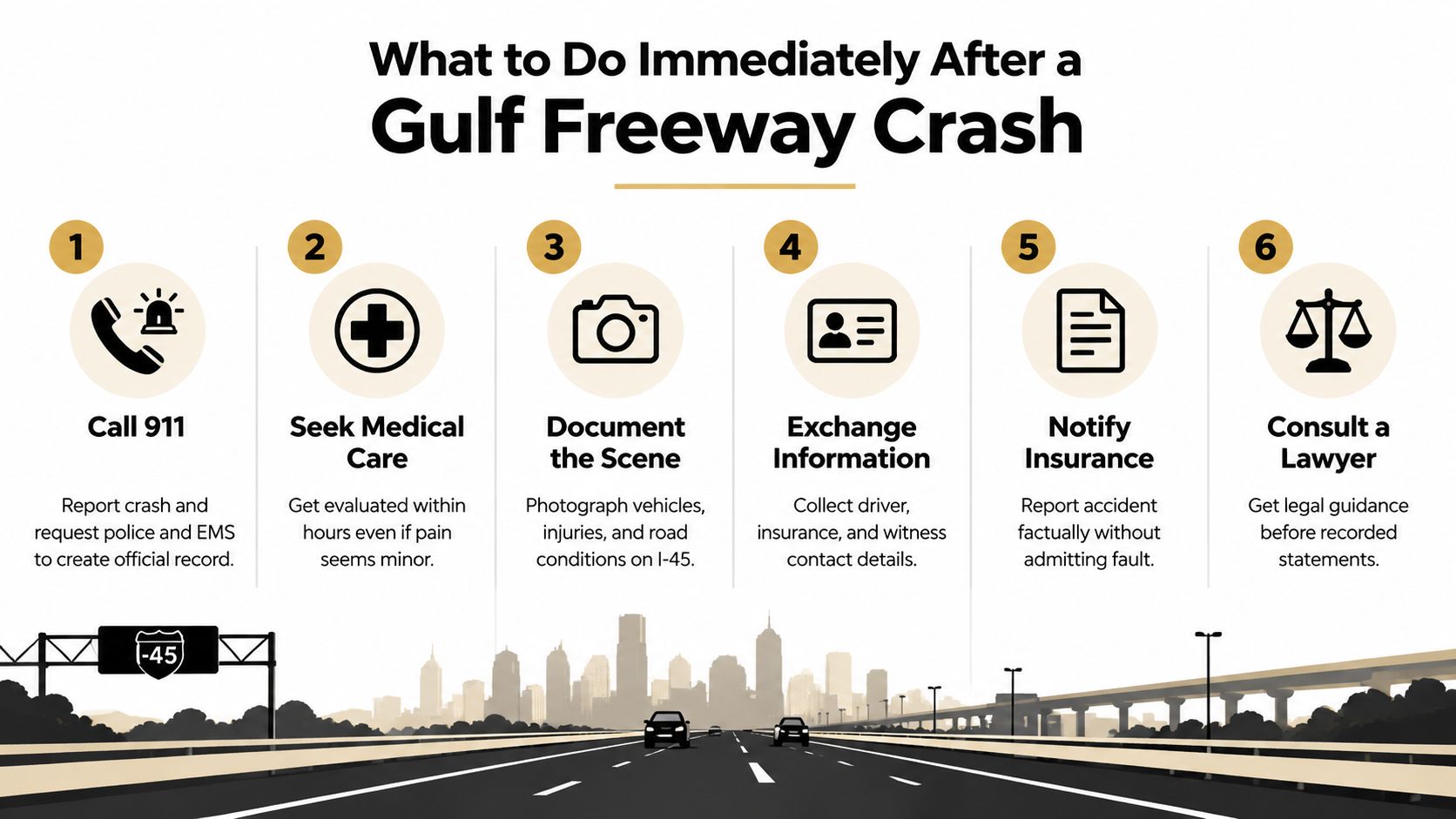
Follow this order
Call 911. Request police and emergency medical services. Give the dispatcher your direction of travel, nearby exit, service road, or mile marker, and report anyone who appears injured. In a pileup, tell responders how many vehicles may be involved.
Get medical care. Concussion symptoms, neck injuries, and soft-tissue pain can appear later. Tell the provider that your symptoms followed the Gulf Freeway crash, and follow the recommended care plan.
Document only what is safe. Photograph vehicle damage, visible injuries, signs, lane markings, debris, road conditions, and vehicle positions. Skid marks, debris patterns, and temporary lane closures may disappear when crews reopen lanes, so record them promptly if you can do so safely.
Collect information from every involved driver. Exchange names, phone numbers, driver's-license details, insurance information, and vehicle descriptions. Ask witnesses for contact information. In a multi-vehicle collision, identify each vehicle that may have contributed, including commercial vehicles.
Notify your insurer carefully. Report the crash as your policy requires, but limit your statement to accurate basic facts. Do not admit fault or guess about speed, distances, or another driver's intentions. Ask whether your policy includes uninsured or underinsured motorist coverage, especially if the other driver has limited insurance.
Preserve records and seek advice. Keep photographs, medical paperwork, repair estimates, tow records, work-loss information, and insurer messages. Before requesting the crash file, review this guide on how to obtain police records.
If a seat belt locked during impact or became difficult to use afterward, do not force a repair yourself. Information about unlocking stuck seat belts may explain why the restraint needs professional attention.
For location-specific representation, an I-45 / Gulf Freeway Accident Lawyer can address the roadway conditions, lane closures, multiple drivers, and insurance disputes that often shape these claims.
Practical rule: Do not argue about fault at the scene. Give emergency responders the facts you know, then let the evidence establish responsibility.
Avoid posting photographs, accusations, or injury updates online. An innocent post can be taken out of context during an insurance dispute.
Understanding Texas Negligence and Fault Laws
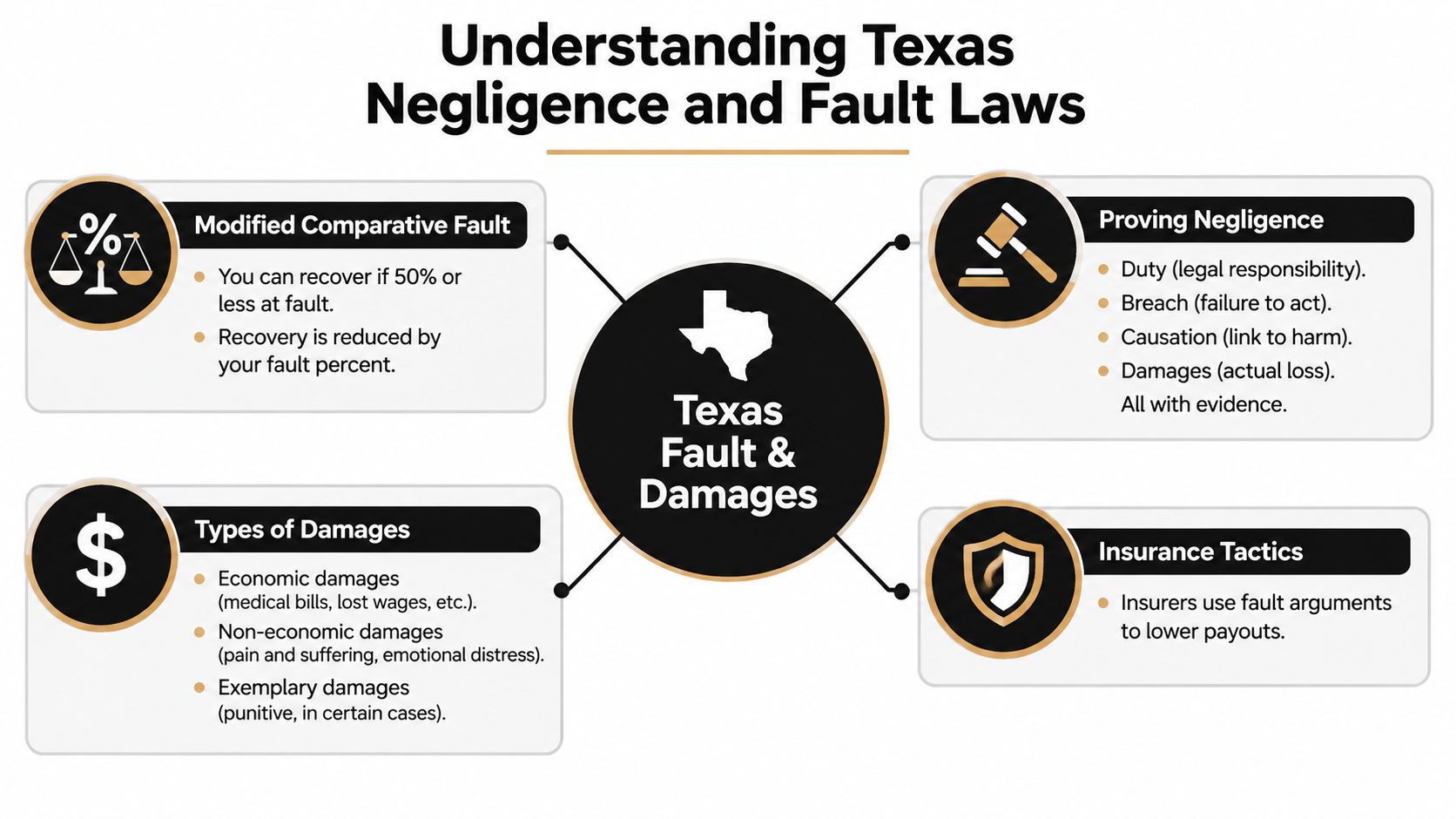
Texas negligence law asks whether someone acted unreasonably and caused your injury. In a car accident claim, you generally need evidence showing a duty to drive safely, a breach of that duty, a connection between the breach and the crash, and actual damages.
Liability means legal responsibility for the collision. Comparative fault means each person's share of responsibility is measured, and that share can affect the amount recovered.
Texas uses modified comparative fault under Civil Practice and Remedies Code Chapter 33. You can recover damages when your responsibility is 50% or less, but your award is reduced by your percentage of fault. If your responsibility is greater than 50%, you can't recover damages under the rule.
How fault arguments affect a real crash
Suppose a Houston driver is rear-ended on I-45. The other driver was following too closely, but an insurer argues that the Houston driver braked suddenly and shares 20% of the blame. If the evidence supports that allocation, the driver may still recover, but the award would be reduced by that percentage. The actual result depends on the facts and proof.
In a pileup, responsibility may involve more than the first two vehicles. A distracted driver, a commercial carrier, a defective component, or a roadway condition may require separate investigation. That's why photographs, witness accounts, vehicle data, traffic footage, and roadway records matter before the scene changes.
You can read a plain-English explanation of comparative fault in Texas before speaking with an attorney.
What damages can include
Damages means the money compensation sought for losses caused by the crash. Compensatory damages can include medical expenses, lost wages, vehicle-related losses, physical pain, emotional harm, and other documented effects of the injury.
Texas Civil Practice and Remedies Code Chapter 41 addresses exemplary damages. These damages are different from ordinary compensation because they may punish especially wrongful conduct and are available only in limited circumstances. Don't assume they apply to every serious accident.
Your Timeline for Medical Care and Legal Action
The strongest Gulf Freeway claims usually develop from consistent action, not rushed decisions. Your health comes first, but medical records also help show what happened, when symptoms began, and how the injury affected your daily life.
Seek medical evaluation promptly, even if your pain seems manageable. Tell the provider about every symptom, including headaches, dizziness, neck pain, back pain, numbness, sleep problems, or changes in concentration. Follow-up care matters because a gap can give an insurer an argument that your injury wasn't serious or wasn't connected to the collision.
Keep a working claim calendar
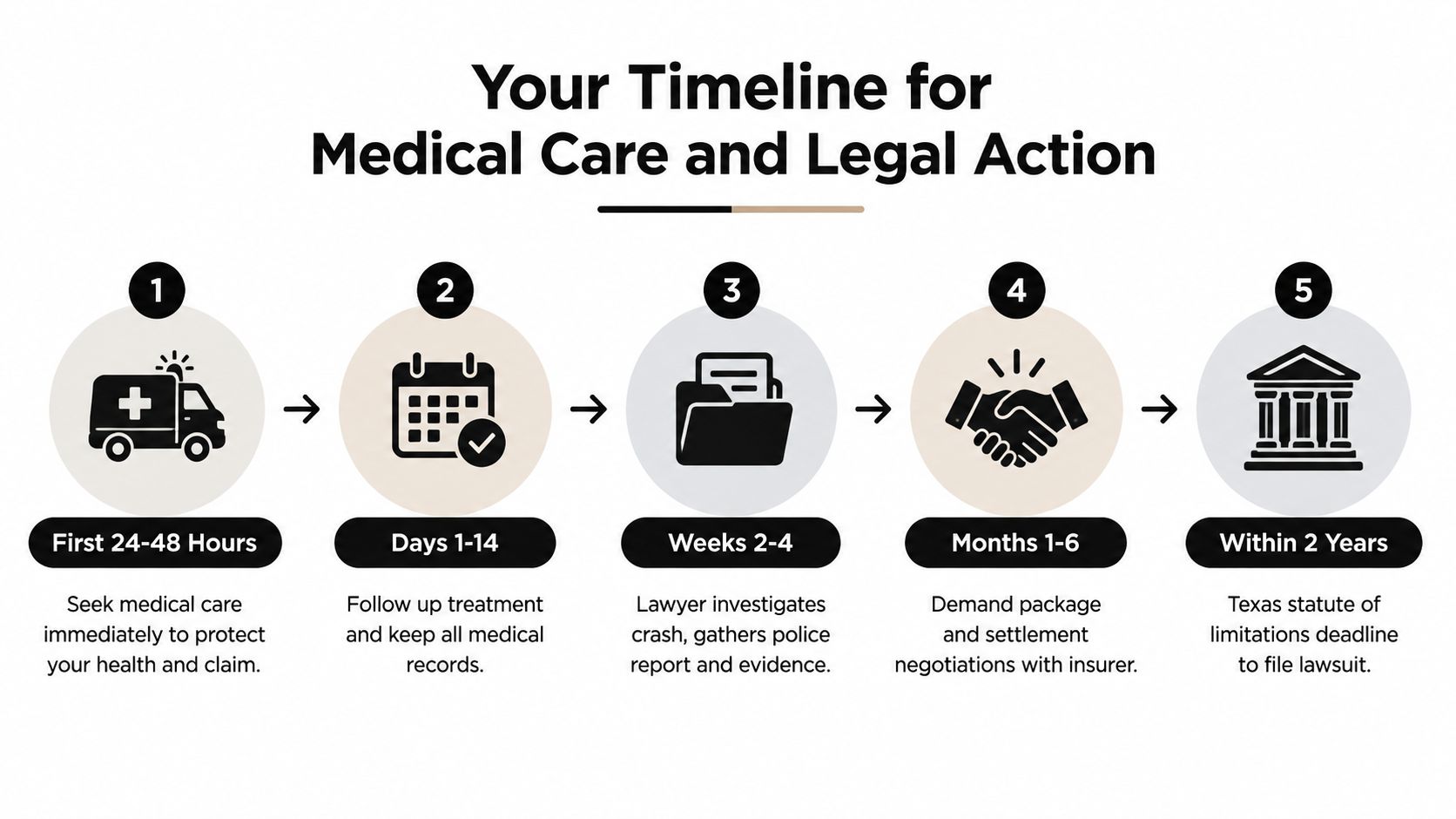
- First hours and days: Report the collision, obtain medical care, preserve photographs, and save every document.
- Early treatment period: Attend recommended appointments and keep bills, prescriptions, test results, and provider instructions.
- Investigation period: A lawyer can request the crash report, identify witnesses, examine vehicle damage, and investigate lane closures or roadway evidence.
- Negotiation period: The claim package should address current losses and the likely effect of the injury, not just the first emergency-room bill.
- Before the legal deadline: Texas personal injury claims from a car accident are generally subject to a two-year statute of limitations under Civil Practice and Remedies Code Section 16.003. A Texas statute of limitations reference explains the rule in practical terms.
A statute of limitations is the legal time limit for filing a lawsuit. Missing it can end a claim, even when the injuries are severe, so don't wait until the deadline is close.
Don't let an early offer set the value
An insurer may offer money before doctors know whether you'll need continued treatment. Once you accept a settlement, you may lose the ability to seek more compensation for problems that become clear later.
Most motor-insurance claimants in the Irish National Claims Information Database settled within 12 months, and 93% settled within 24 months, according to the National Claims Information Database private motor insurance report. That benchmark doesn't predict your Texas case, but it reinforces an important point: negotiation is common, and careful documentation can matter throughout the process.
How to Choose the Right Houston Car Accident Lawyer
Don't choose a lawyer based only on a large advertisement or a promise about results. Choose someone who can explain the investigation, coverage issues, fees, deadlines, and risks in language you understand.
Ask about experience with I-45 multi-vehicle collisions, lane-closure evidence, commercial vehicles, and disputed police findings. If another driver had little insurance or no insurance, ask whether the lawyer handles uninsured and underinsured motorist disputes and reviews your own policy.
Questions to ask before hiring
| Question to Ask | Why It Matters |
|---|---|
| Have you handled Gulf Freeway multi-vehicle crashes? | I-45 cases may involve several drivers, changing lane conditions, and different sources of evidence. |
| How will you investigate roadway and lane-closure evidence? | Skid marks, debris, traffic footage, and roadway records may be time-sensitive. |
| Do you handle UM/UIM coverage disputes? | Your own policy may become important when the responsible driver lacks enough coverage. |
| Who will communicate with the insurance adjuster? | Clear communication helps prevent inconsistent statements and missed requests. |
| What happens if negotiations fail? | You should understand whether the lawyer can prepare the case for litigation when appropriate. |
| How do fees and case expenses work? | A contingency agreement should explain what you pay, when payment is due, and which expenses may be deducted. |
A contingency-fee arrangement generally means you don't pay attorney fees unless the firm recovers for you. Read the written agreement carefully, especially its treatment of case expenses and settlement authority.
Local familiarity can also help. A lawyer who regularly works with Houston crash records, Harris County procedures, and Texas roadway evidence may spot an investigative issue that a general practice lawyer misses. For a broader decision framework, review how to choose a car accident lawyer.
If your collision happened while working, employment and insurance questions may overlap. A separate resource about workers compensation for small businesses can help business owners understand that workplace coverage is a different legal issue from a third-party crash claim.
The Law Office of Bryan Fagan, PLLC offers free consultations and contingency-fee representation for Texas injury claims. The firm handles auto collisions, trucking accidents, uninsured or underinsured motorist disputes, and fatal accidents, while combining negotiation with courtroom advocacy when needed.
Common Mistakes That Can Hurt Your Claim
The first insurance conversation can shape the entire claim. The adjuster may sound helpful, but the insurer's goal is to evaluate its financial responsibility, not to protect your legal position.
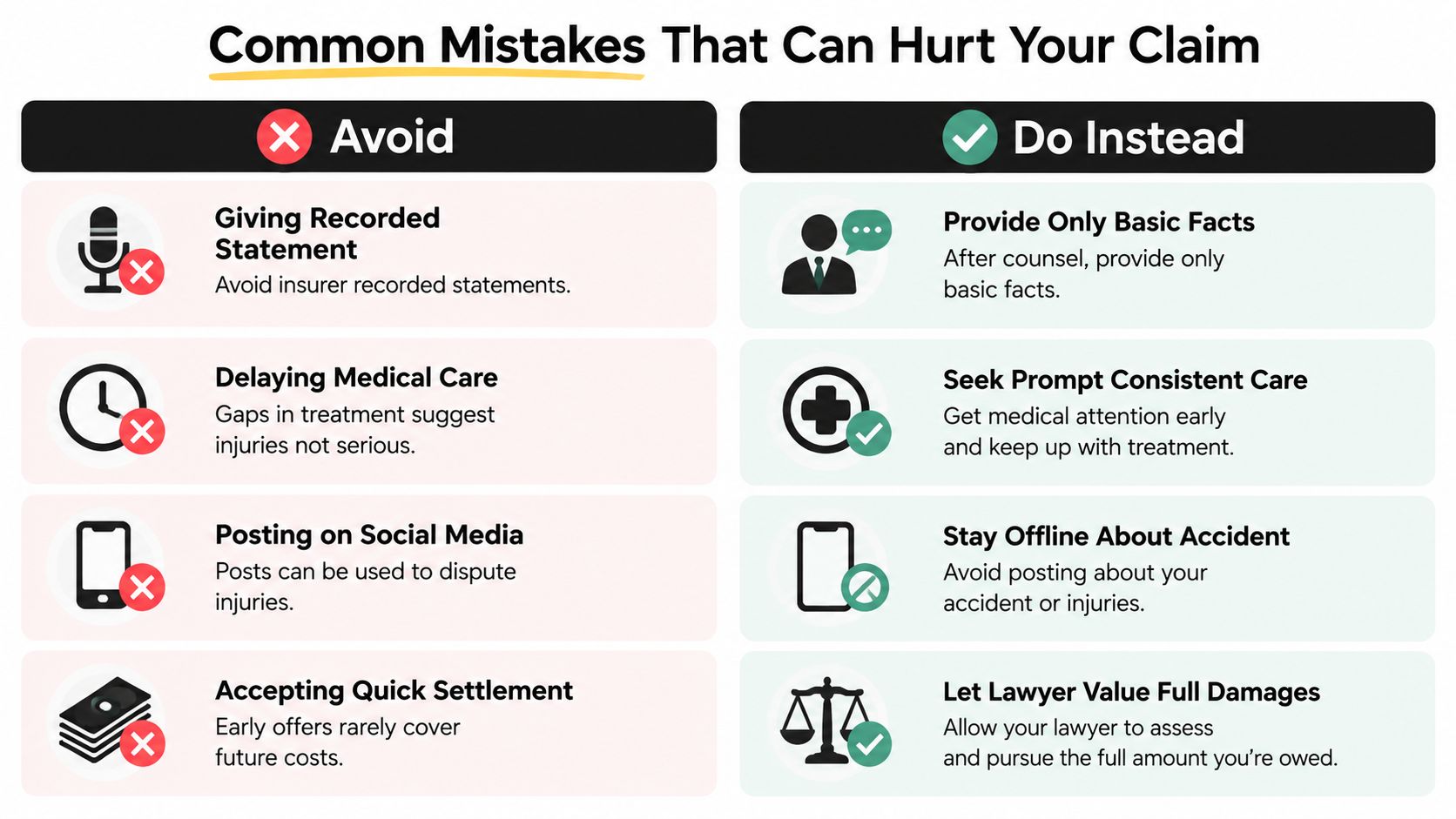
Protect your position before the dispute grows
- Giving a recorded statement: Don't speculate about fault, pain, speed, or memory. Provide required basic information and seek legal advice before answering detailed questions.
- Accepting a quick settlement: An early payment may not account for ongoing treatment, lost income, or future limitations. Have the offer reviewed before signing.
- Skipping medical care: A treatment gap can give the insurer a reason to challenge the seriousness or cause of your injury. Tell your provider when symptoms change and keep appointments.
- Posting online: Don't publish crash photos, travel updates, physical activities, or comments about the other driver. Insurers may use public posts to dispute your account.
Coverage problems require a separate review
Uninsured and underinsured motorist coverage can become especially important when the at-fault driver can't provide enough liability insurance. Your own insurer may then evaluate the claim, but that doesn't mean it automatically agrees with your valuation or fault analysis.
Review the policy before assuming coverage applies. Save declarations pages, notices, correspondence, and recorded communications, and don't sign a release before you understand what rights it affects.
A claim is easier to protect when your medical records, wage documents, repair estimates, and liability evidence tell the same consistent story.
You should also notify your own insurer according to the policy's requirements. Report the crash accurately, preserve confirmation of the notice, and direct detailed liability questions to your lawyer when appropriate.
Take the Next Step Toward Your Recovery
You can protect your claim by documenting the crash, following medical advice, understanding Texas comparative fault, and respecting the two-year filing deadline. Families who lose someone may also pursue wrongful death compensation for losses such as loss of companionship, funeral expenses, and lost financial support, depending on the circumstances and applicable law.
You don't have to manage a Gulf Freeway investigation and insurance dispute while trying to heal. A free consultation can help you understand liability, damages, coverage, and the next practical step without pressure or scare tactics.
The Law Office of Bryan Fagan, PLLC offers free consultations and contingency-fee representation for Gulf Freeway car accident, truck accident, UM/UIM, and wrongful death claims. Contact The Law Office of Bryan Fagan, PLLC to discuss the evidence, deadlines, and insurance issues affecting your recovery.