 Skip to content
A car crash can change your life in seconds, but you don't have to face recovery alone. If you're sitting at home after a wreck in Cypress, replaying the collision and wondering how you're going to handle the car repairs, the doctor visits, and the calls from insurance, you're already dealing with more than one problem at once. You need clear answers, and you need them now.
A good cypress tx accident lawyer does more than file paperwork. The right Texas injury attorney looks at fault, coverage, medical proof, and deadlines together, because that's how real claims are won or lost. At The Law Office of Bryan Fagan, PLLC, the focus is straightforward, protect your rights, document the crash early, and push back when an insurer tries to pay less than your claim is worth.
Life After a Crash in Cypress
A Cypress driver gets hit on a busy stretch near US-290, and the first few minutes feel unreal. The hood is bent, traffic is piling up, and your neck or back starts hurting only after the adrenaline drops. That's when the phone calls start, and that's when a lot of people make the wrong move by trying to “handle it themselves.”
You don't need to prove toughness after a wreck. You need to protect your case and your health at the same time. That means getting medical care, documenting what happened, and talking to someone who understands Texas personal injury law before the insurance company starts shaping the story.
Practical rule: if you're hurt, treat the crash like evidence from the start. Photos, medical records, and witness details matter long before a settlement number is ever discussed.
If you're dealing with pain, stress, or trouble sleeping after a collision, even basic recovery can feel hard. It can help to have practical support for the day-to-day side of healing too, including simple resources like find non-prescription analgesic when you're trying to stay comfortable while you sort out the bigger claim issues.
The Law Office of Bryan Fagan, PLLC works with injured Texans who need a calm, direct plan after a crash. That matters because the legal side gets complicated fast, especially when fault is disputed or the other driver's insurance starts denying responsibility. A strong Houston car accident lawyer should make the process feel less chaotic, not more.
Critical Steps to Take After a Car Accident
The first move is safety. Get yourself out of danger if you can, call 911, and make sure police and emergency responders are on the way. If anyone seems injured, don't wait to “see how it feels later,” because delayed care is one of the easiest ways a claim gets weakened.
Next, start documenting everything you can see. Take photos of the vehicles, the roadway, skid marks, traffic signals, and any visible injuries. The goal is simple, preserve evidence before it disappears. Houston-area crash volume is high, with 66,988 crashes in 2021 in Houston, which averages about 184 crashes per day or 7.6 per hour according to regional crash statistics, so scene evidence can be especially short-lived.
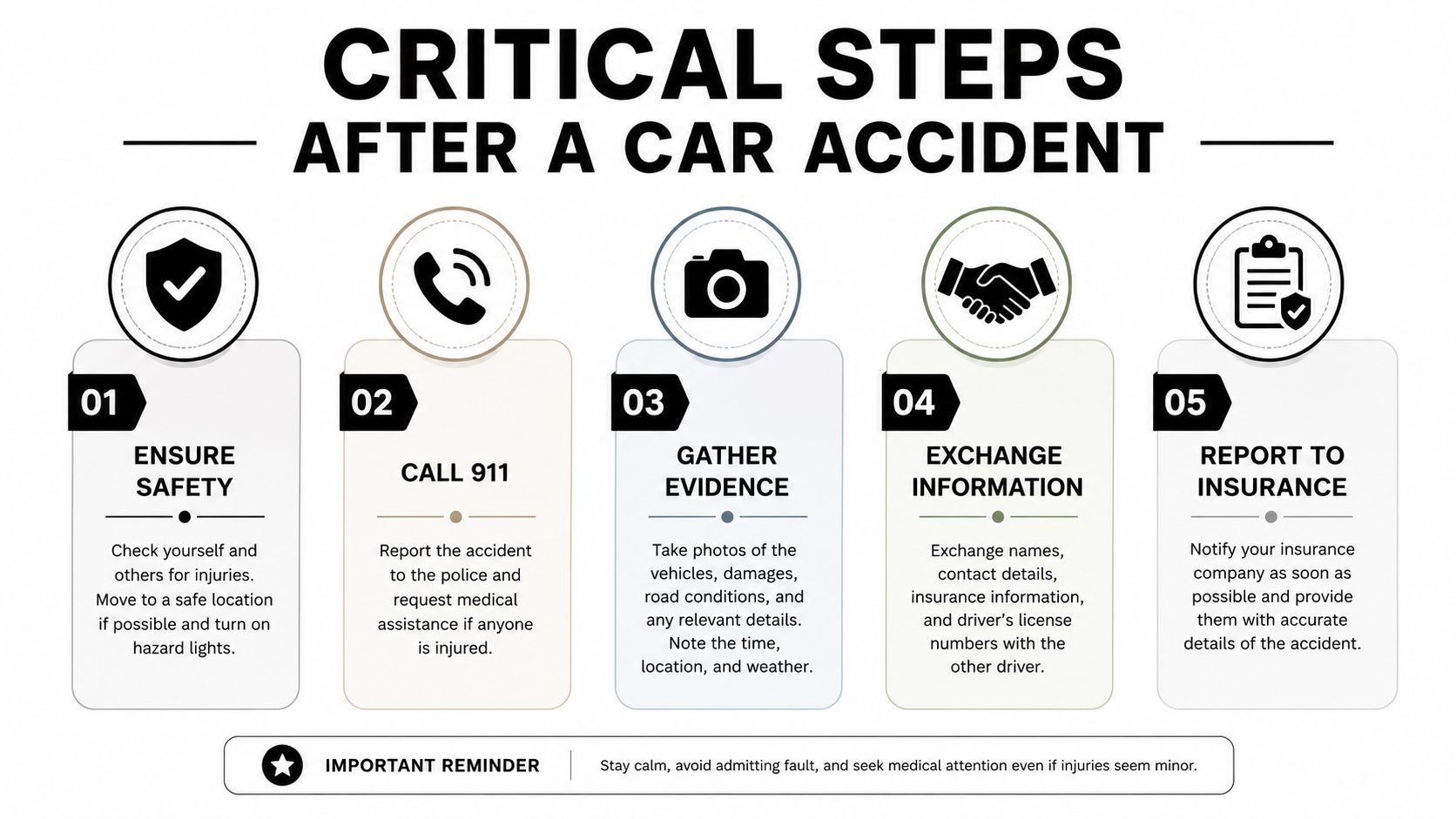
You should also exchange insurance and contact details, but keep your words brief. Don't admit fault, don't guess about speed or distance, and don't tell an adjuster your injuries are minor just because you're still in shock. If you need a roadmap for the next few days after the collision, the guide at steps after a car accident is a useful place to start.
A lot of victims also ask where a crash on a major road fits into the bigger picture. If your wreck happened on a high-speed corridor, a case involving the I-45 / Gulf Freeway Accident Lawyer category can be relevant, because highway collisions often involve faster impacts and more serious injuries.
Understanding Texas Negligence and Comparative Fault
Texas negligence law is built around a basic idea, the person who caused the crash should pay for the harm they caused. In plain English, liability means legal responsibility. Damages mean the money value of your losses, including medical care, missed work, and pain.
But Texas doesn't treat fault as all-or-nothing. Under Chapter 33 of the Texas Civil Practice & Remedies Code, the state uses modified comparative fault, also called the 51% bar rule. If you're 51% or more at fault, you recover nothing. If you're less than 51% at fault, your recovery gets reduced by your share of blame as described in Texas comparative-fault guidance.

Why insurers fight over fault percentages
Insurers don't argue percentages just to be difficult. They do it because a shift from one version of events to another can change whether a claim is worth a serious payout at all. A rear-end collision, for example, often turns on following distance and distraction evidence, while an intersection crash turns on right-of-way and signal timing.
Fault isn't a side issue. In Texas, it's often the whole case.
Here's the kind of example that changes settlement value. A Houston driver gets rear-ended, but the insurer claims the lead driver had a broken taillight and was 20% at fault. If that argument sticks, the injured driver's recovery drops by that share. That's why photos, vehicle damage, and witness accounts matter so much.
A skilled Texas injury attorney should build the fault picture early and keep the insurer from inflating your share of blame. If the evidence shows the other driver was careless, that evidence needs to be organized before the adjuster creates a new story.
The Reality of Uninsured and Underinsured Motorist Claims
A lot of people assume the at-fault driver's insurance will take care of everything. That's not how many Cypress claims work. When the driver who caused the crash has no coverage, or not enough, the fight turns into a coverage problem, not just a fault problem.
That's where coverage architecture matters. You need to know all the policies that might apply, including bodily-injury liability limits, UM and UIM coverage, and any added coverage connected to rideshare, commercial, or work travel. One Cypress-focused source notes that about 1 in 12 Texas motorists is uninsured in its discussion of Texas uninsured-driver claims, which makes these disputes a normal part of practice, not a rare exception.
A strong claim doesn't stop at the first policy. It looks at every available source of recovery, then matches those limits against the harm you suffered. That's especially important when medical bills, time off work, and rehabilitation needs outgrow the other driver's coverage.
The practical mistake many people make is waiting too long to check their own policy. If you have UM or UIM coverage, it can matter just as much as the at-fault driver's policy, especially in serious injury claims. The overview at uninsured and underinsured motorist coverage helps explain how those claims are often handled.
A careful auto insurance claim strategy also means keeping proof of damages organized. ER records, imaging, surgical recommendations, wage records, and therapy notes help show the full value of the claim, not just the first stack of bills. That's the difference between guessing and proving.
Types of Auto Accidents We Handle in Cypress
Rear-end crashes are common, but they're not simple. In those cases, the key questions are often following distance, distraction, and braking time. If the other driver was texting or looking away, that evidence can be more important than what either person remembers in the moment.
Intersection crashes, including T-bone collisions, work differently. The question becomes who had the right of way, whether the light had changed, and whether the drivers' paths crossed because someone ran a signal. Side-impact cases can cause severe injuries because the side of a vehicle offers less protection.

Different crash types need different proof
Multi-vehicle chain reactions are even trickier. Fault may need to be reconstructed step by step instead of relying on one witness who only saw the last impact. In those cases, vehicle damage photos, event data recorder information, and traffic-camera footage can be critical before they disappear.
Head-on collisions and trucking accidents raise the stakes fast. The injuries are often more serious, and the insurance questions are more complicated because more than one policy may be involved. The same is true for rideshare crashes, where the coverage rules can change depending on what the driver was doing at the time.
The technical point is simple, but important. A Cypress, TX accident lawyer should match the evidence to the crash type, not use the same approach for every case. For a collision on a major corridor, the Houston Car Accident Lawyer category can be a useful reference point, because city and county crashes often share the same basic liability issues even when the roads are different.
How the Claims Process Works From Start to Finish
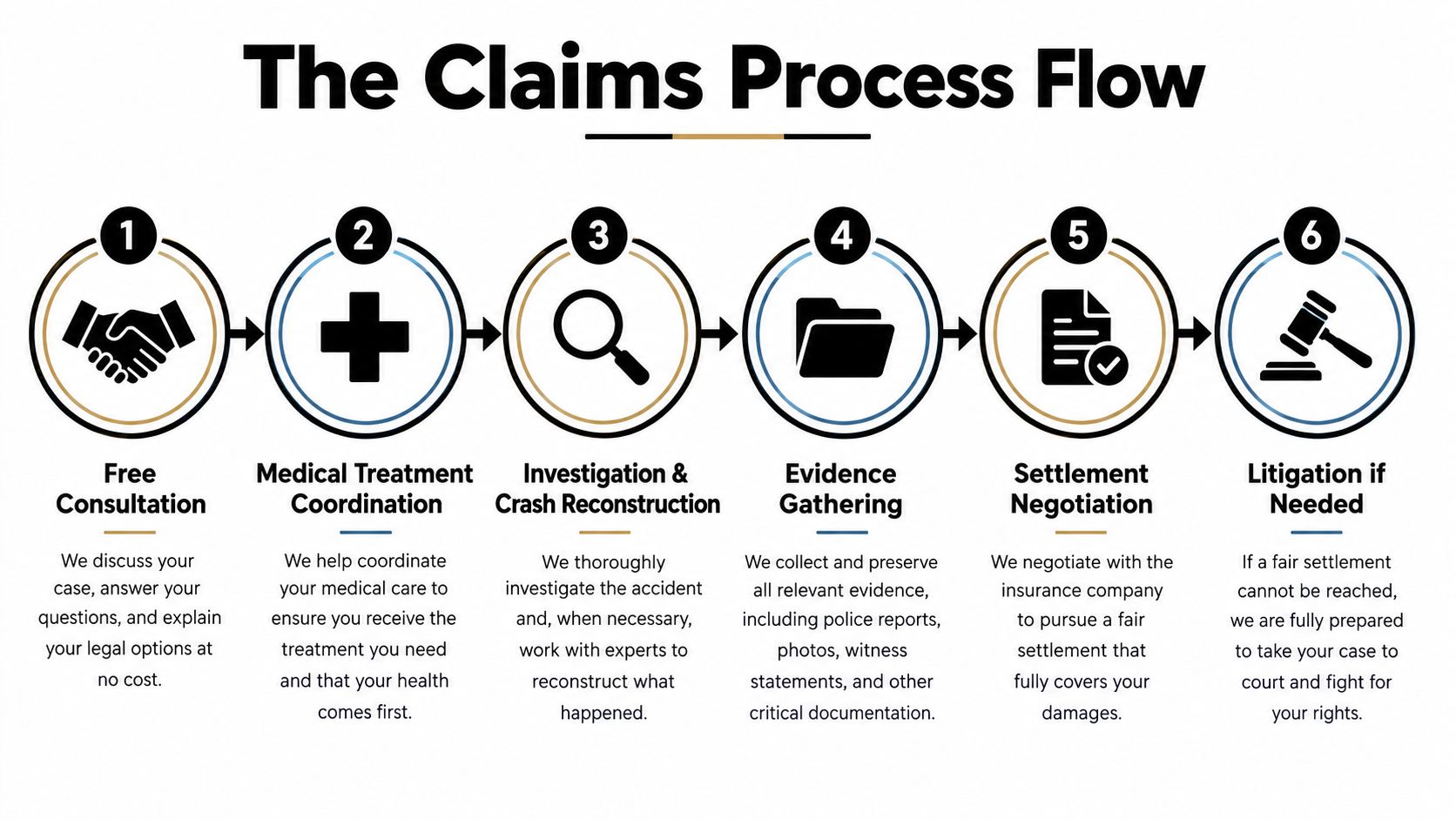
The claims process should feel organized, not confusing. First comes the consultation, where you explain what happened and the lawyer starts spotting fault, coverage, and deadline issues. Then medical care and case investigation move together, because treatment records often become the backbone of the claim.
From there, the attorney collects evidence, requests records, and builds the liability story. That may include crash reconstruction, photos, witness statements, and insurer correspondence. Once the picture is clear, a demand goes out and negotiations begin.
What you should expect at each stage
The early stage is about preservation, not pressure. If the insurance company calls quickly, that doesn't mean you should rush into a recorded statement. It means you should slow down and make sure the facts are being handled correctly.
Practical rule: don't let the insurer set the pace for your claim. The first settlement offer is often designed to close the file, not pay the full value.
If negotiations stall, litigation may be the right move. That doesn't mean every case goes to trial, but it does mean your lawyer needs to be ready to file and prove the case in court if that's what it takes. A firm that handles crash cases should be able to coordinate the claim, communicate with the insurer, and, when needed, take the fight into the courtroom.
This is also where a lawyer earns their keep. The firm can handle the heavy lifting while you focus on healing, appointments, and family obligations. That matters in serious cases because stress alone can make decision-making harder than it needs to be.
Recoverable Damages and the Statute of Limitations
After a crash, damages usually fall into two broad groups. Economic damages cover the financial side of the harm, like medical bills, lost wages, future treatment, and rehabilitation. Non-economic damages cover the human side, like pain, mental strain, and the way the injury changes daily life.
The important point is that you should document both. Don't let the insurer focus only on the first emergency room bill. A crash injury often grows into a longer recovery, and the value of the claim should reflect that bigger picture.
A lot of people also miss how fast the legal clock runs. Texas gives injured crash victims two years from the date of the collision to file most car-accident lawsuits under Texas Civil Practice and Remedies Code Section 16.003, and that deadline applies in Cypress too as explained in this statute-of-limitations guide. Once that deadline passes, the right to pursue compensation in court is generally lost.
That's why early records matter so much. If you're trying to understand how prior collisions and repair records can be useful in a claim or in a vehicle history review, accident records for used cars is a practical resource on how crash documentation can follow a vehicle.
Wrongful death compensation follows the same urgency, but the stakes are even higher for families. If a crash took someone's life, don't wait to ask whether a claim exists. The sooner the case is reviewed, the easier it is to preserve evidence, identify coverage, and protect your family's rights.
Get Your Free Consultation Today
If you were hurt in Cypress, don't try to sort out fault, coverage, and deadlines on your own. The right move is to get the claim reviewed early, before evidence disappears and the insurer locks in its version of events. You deserve straight answers about liability, damages, and whether a settlement offer is fair.
The Law Office of Bryan Fagan, PLLC helps accident victims pursue compensation after car crashes, uninsured-driver claims, and fatal collisions. The firm offers free consultations and contingency-fee representation, so you don't pay unless there's a recovery.
If you're ready to protect your claim, contact a lawyer now and get the file moving. Bring your photos, medical records, insurance letters, and any police report you have. The sooner you act, the stronger your position usually is.
If you need help after a crash, The Law Office of Bryan Fagan, PLLC can review your wreck, explain your options, and help you take the next step with confidence. Visit The Law Office of Bryan Fagan, PLLC to connect with a team that handles Cypress car accident claims, insurance disputes, and serious injury cases with care and direct guidance.


