A car crash can change your life in seconds, but you don't have to face recovery alone. If a Lyft ride in Houston ended with flashing lights, pain, or a tow truck on the curb, you may be dealing with medical bills, missed work, and an insurance company that already wants a statement. A Houston Lyft accident lawyer can help you sort out what happened, what coverage applies, and what your claim may be worth under Texas law.
Introduction to Houston Lyft Crash Claims
A Lyft crash often starts like any other Houston ride. You open the app, get in, and expect to reach your destination safely, whether that's downtown, the Galleria, or the airport. Then a driver brakes too late, another car runs a light, or your trip ends with a hard hit that leaves everyone shaken.
Those first minutes matter because rideshare claims turn on facts that regular car wrecks don't always raise. App status, crash timing, and insurance layers can decide who pays and how much coverage is available. A Houston car accident lawyer who handles rideshare cases can help you protect the evidence that proves those facts and avoid mistakes that make insurers deny or shrink your claim.
Practical rule: In a Lyft crash, the app log can matter as much as the police report.
Texas law also gives you a hard deadline to act, so waiting can hurt even a strong case. If the crash injured you or a family member, the sooner you understand your rights, the better your chances of protecting compensation for medical care, lost income, and long-term recovery. If the collision was fatal, the same early steps can affect a later claim for wrongful death compensation.
How a Lyft Accident Lawyer Can Help You
A Lyft claim isn't just about proving that someone was careless. It's about proving who was careless, what insurance applies, and when the ride was active. That's where a lawyer's work becomes practical, not theoretical.
The evidence work starts fast
A lawyer can request the police crash report, preserve app-related proof, and push for the ride-state records that show whether the driver was off duty, waiting for a request, or actively transporting a passenger. That matters because Lyft's coverage changes by app phase, and if the wrong phase is assumed, the insurer may try to shift the claim onto a smaller policy or deny it altogether. The difference can decide whether your auto insurance claim is handled like a routine wreck or treated as a commercial rideshare case.
The negotiation work is different too
Insurance adjusters often move fast after a rideshare crash. They may ask for a recorded statement, downplay the injury, or suggest that another driver caused everything. A lawyer steps in to control that conversation, document damages, and press for payment tied to your actual losses, not the insurer's first offer. For readers comparing options, the Houston Uber and Lyft Accident Lawyer resource explains how liability and coverage work in Houston rideshare crashes, and this rideshare article is another useful reference point for understanding how the same core issues come up in app-based collisions.
A real-world example helps. If a Houston driver rear-ended on I-45 was injured while riding as a Lyft passenger, the claim may involve the Lyft driver, another motorist, or both. The lawyer's job is to sort out fault, preserve the app evidence, and pursue the coverage that matches the ride phase so medical bills and lost wages aren't left hanging.
Navigating Lyft and Texas Insurance Coverages
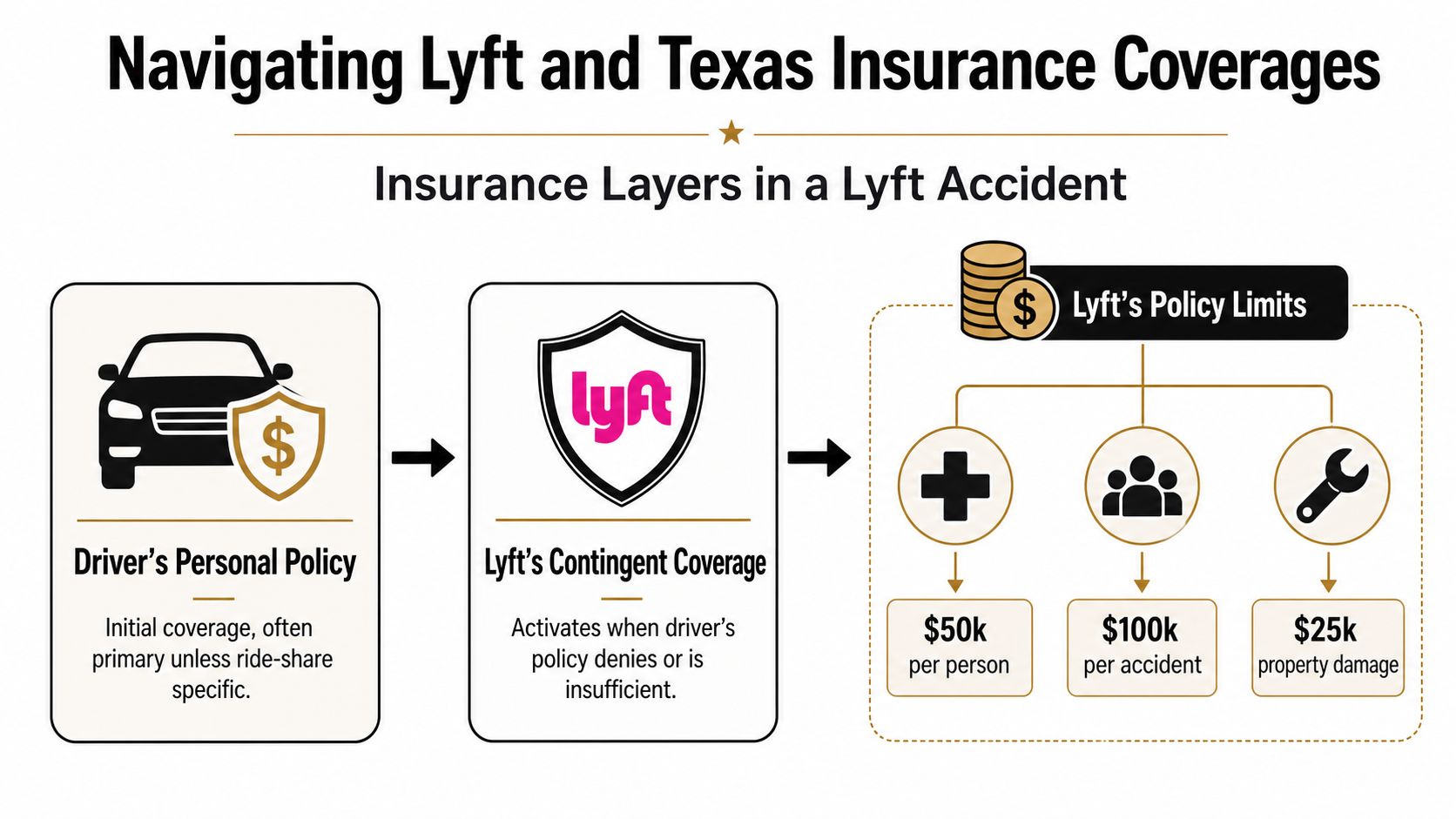
Think of a Lyft claim like stacked safety nets. The lower net is the driver's personal auto policy. Above that sits Lyft's contingent liability coverage, and above that is the larger commercial layer that can apply during an accepted ride or while the driver is en route to pick up a passenger.
Why app status changes everything
When the app is off, the crash usually falls under the driver's personal policy. When the app is on but no ride has been accepted, Lyft's contingent coverage is typically $50,000 per person, $100,000 per accident, and $25,000 for property damage. During an accepted ride or while driving to a passenger, coverage rises to $1 million in liability coverage, and uninsured or underinsured motorist protection is also included, according to the Houston Lyft coverage summary in the brief's verified data.
That's why app-status evidence is the backbone of these cases. If the driver says they weren't on the app, the insurer may try to treat your crash like an ordinary collision. If the ride was active, the claim may reach a much larger commercial layer. Houston victims often discover that the key dispute isn't only about fault, it's about proving the exact moment the app was active.
Coverage disputes often start with one question, what was the driver doing at the exact moment of impact?
How this affects your claim
The rideshare Houston TX page is a helpful local overview if you want a broader look at Houston rideshare claims. In practice, the best strategy is simple, preserve screenshots, ride receipts, and timestamps before the app history disappears or gets harder to recover. A Texas injury attorney will also compare Lyft coverage with any other policy that might apply, especially when another motorist caused the wreck.
What to Do After a Lyft Accident

The first few hours after a crash can shape the whole case. Texas law requires a police report when there's injury or $1,000 or more in property damage, so a 911 call is not just smart, it's part of building the record that connects the Lyft ride to your injuries.
Start with the scene
Call 911, check for injuries, and wait for law enforcement if it's safe to do so. Take photos of the cars, the roadway, traffic signals, skid marks, and visible injuries. If you can, save Lyft screenshots showing the ride, the driver, and the trip details before the app history changes.
Then gather names and contact information for witnesses. Independent witnesses can help later if the driver changes their story or an insurer argues about fault. A quick medical visit matters too, even when you feel sore rather than seriously hurt, because delayed pain can still be tied to the crash if it's documented early.
Why the paper trail matters
The official report, photos, app data, and medical records all work together. They help prove liability and damages, which are two separate parts of a claim. Liability means legal responsibility for the crash. Damages means the money tied to the harm, such as treatment, missed pay, and pain.
For body repair issues, some people also review choosing quality collision components so they understand how repair choices affect a car's post-crash condition. A Lyft passenger, pedestrian, or another driver should also report the incident through the app before closing out the trip if possible.
Don't give a recorded statement to an insurer until you know which coverage layer should apply.
Common Legal Issues in Lyft Injury Claims

Three issues come up again and again in Lyft claims. The first is who's liable. The second is how Texas comparative fault works. The third is whether an uninsured or underinsured driver leaves you relying on another layer of coverage.
Fault is often shared
In many Houston crashes, more than one driver may have caused the wreck. A Lyft driver may have been distracted, while another motorist ran a red light or cut across lanes. In that situation, the claim may involve several insurers, and each one may try to point the finger elsewhere.
Comparative fault can reduce recovery
Under Texas Civil Practice and Remedies Code Chapter 33, a plaintiff's damages are reduced by their percentage of fault, and recovery is barred if they are more than 50% responsible. That rule matters because insurers often argue about lane changes, following distance, or who had the right of way.
Third-party claims aren't limited to passengers
A lot of Houston people think only passengers can recover in rideshare crashes, but that's not true. If a Lyft driver hits a pedestrian, cyclist, motorcyclist, or another driver, those injured people may still have a claim. In such situations, a Houston Lyft accident lawyer and a careful investigation of app status become especially important, because the right policy may depend on who caused the crash and whether the driver was logged in.
Types of Recoverable Damages
A Lyft crash claim can include more than hospital bills. The law looks at both the money you've already lost and the harm that follows you home after the wreck. In plain English, damages are the losses you're asking the insurer or court to pay for.
| Damage Type | Examples | Purpose |
|---|---|---|
| Medical costs | ER care, follow-up visits, therapy | Covers treatment tied to the crash |
| Lost income | Time away from work, reduced earning ability | Replaces wages lost during recovery |
| Property losses | Vehicle repair or replacement | Pays for damage caused in the collision |
| Pain and suffering | Ongoing pain, stress, sleep problems | Recognizes nonfinancial harm |
| Wrongful death losses | Funeral-related losses and family harm | Supports surviving family members after a fatal crash |
A strong claim documents each category clearly. If the injury affects your ability to work, that loss belongs in the file. If the crash causes lasting pain or limits daily life, that belongs too. In severe cases, families may also need guidance on a wrongful death claim, especially when a rideshare collision causes a fatal head-on or intersection impact.
Texas negligence law also matters here, because the amount you can recover depends on proving that another person's careless conduct caused the harm. That's one reason detailed medical records and accurate wage proof matter so much. The insurance company won't volunteer those losses, and it won't calculate them fairly unless the evidence forces the issue.
Deadlines Fees and Selecting a Lawyer
Texas personal injury claims, including Lyft accident claims, generally must be filed within two years of the crash date under Texas law. That deadline is a real lawsuit deadline, not just an insurance timeline, and missing it can end the case before a judge ever looks at the facts. Delays also make it harder to recover app data, trip records, and witness details.
A lot of injured people worry about legal fees, and that's understandable. Most personal injury cases are handled on a contingency basis, which means you don't pay upfront and the fee comes from the recovery if there's a win. For a closer look at how those arrangements usually work, see accident lawyer fees.
When you choose a lawyer, look for three things. First, local trial experience in Houston. Second, direct communication so you know what's happening. Third, an approach that treats app-status evidence and insurance layers as the core of the case, not an afterthought. The Law Office of Bryan Fagan, PLLC is one option for people who want a free consultation and help from a team that handles Texas auto and rideshare injury matters.
Frequently Asked Questions
Can a pedestrian or cyclist sue after a Lyft driver hits them? Yes. You don't have to be inside the car to have a claim. The key issues are who caused the crash and what the driver's app status was when it happened.
What if the app logs and the driver's story don't match? That's common. A lawyer can request ride records and preserve screenshots, because app-status evidence often decides which policy applies.
Does my own insurance matter too? It can. Your own UM or UIM coverage may help if the at-fault driver is uninsured or underinsured, especially when another policy doesn't fully cover the losses.
Should I talk to Lyft before getting legal advice? Keep the report factual and brief. Don't guess about fault or injuries, and don't give a recorded statement to any insurer until you understand the coverage issues.
If you were hurt in a Lyft crash in Houston, reach out to The Law Office of Bryan Fagan, PLLC for a free consultation. A careful review of the app status, crash report, and insurance layers can make the difference between a denied claim and a claim that moves forward with purpose.